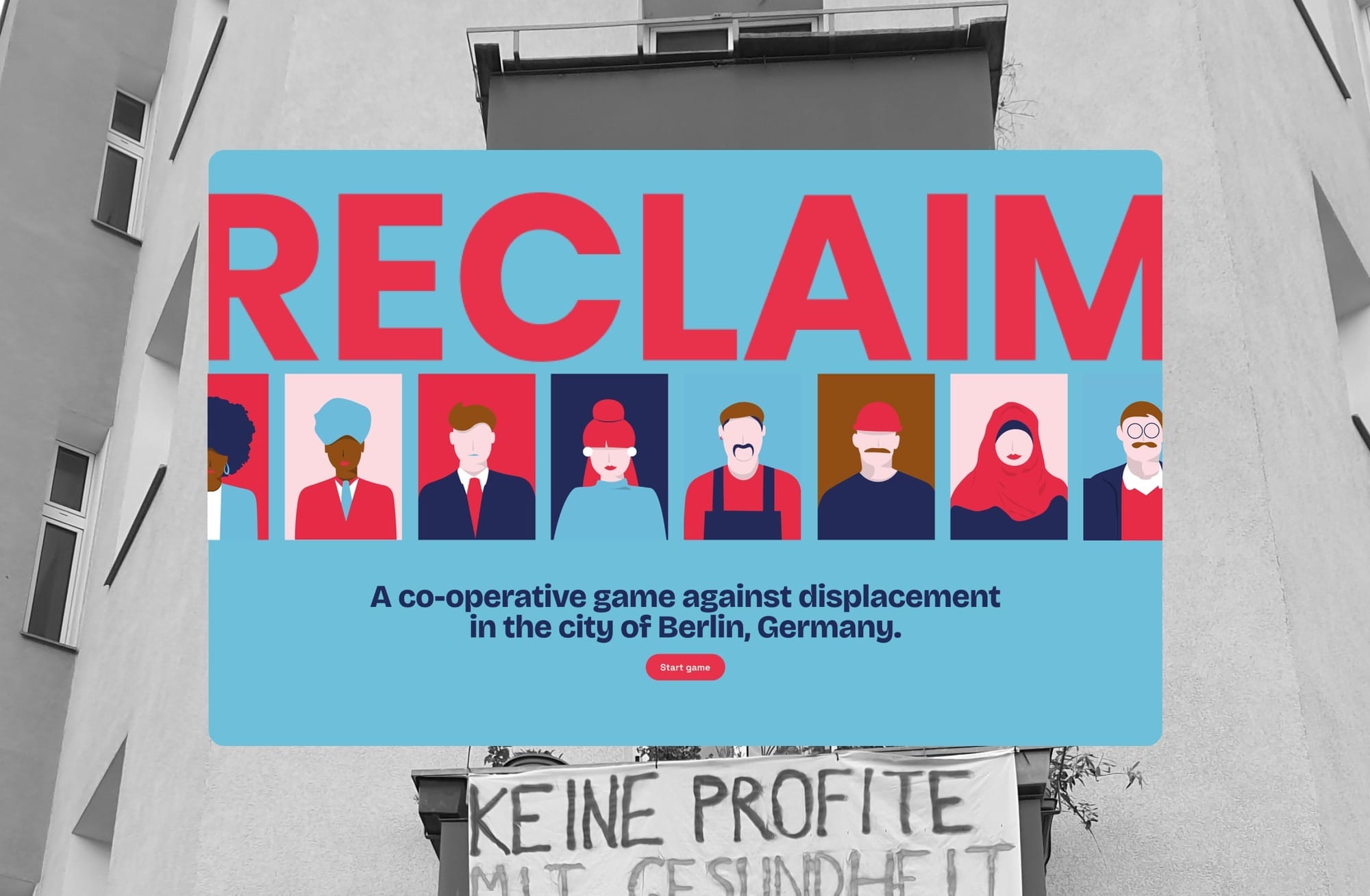
Reclaim
Reclaim Berlin
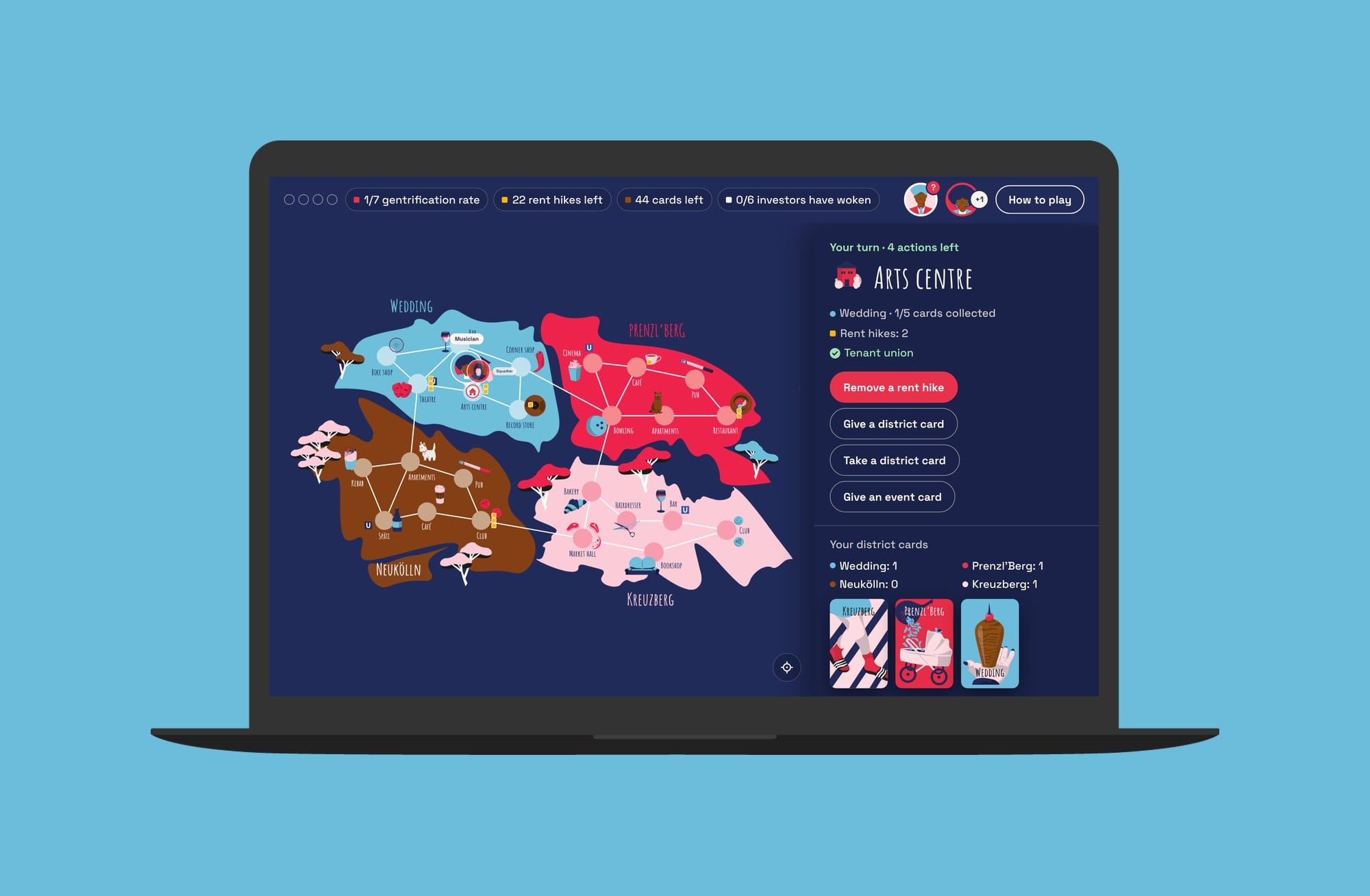
Turning a cooperative board game into a web game you can play together.
The origin
In 2020, I explored how game design can be used to communicate complex social issues.
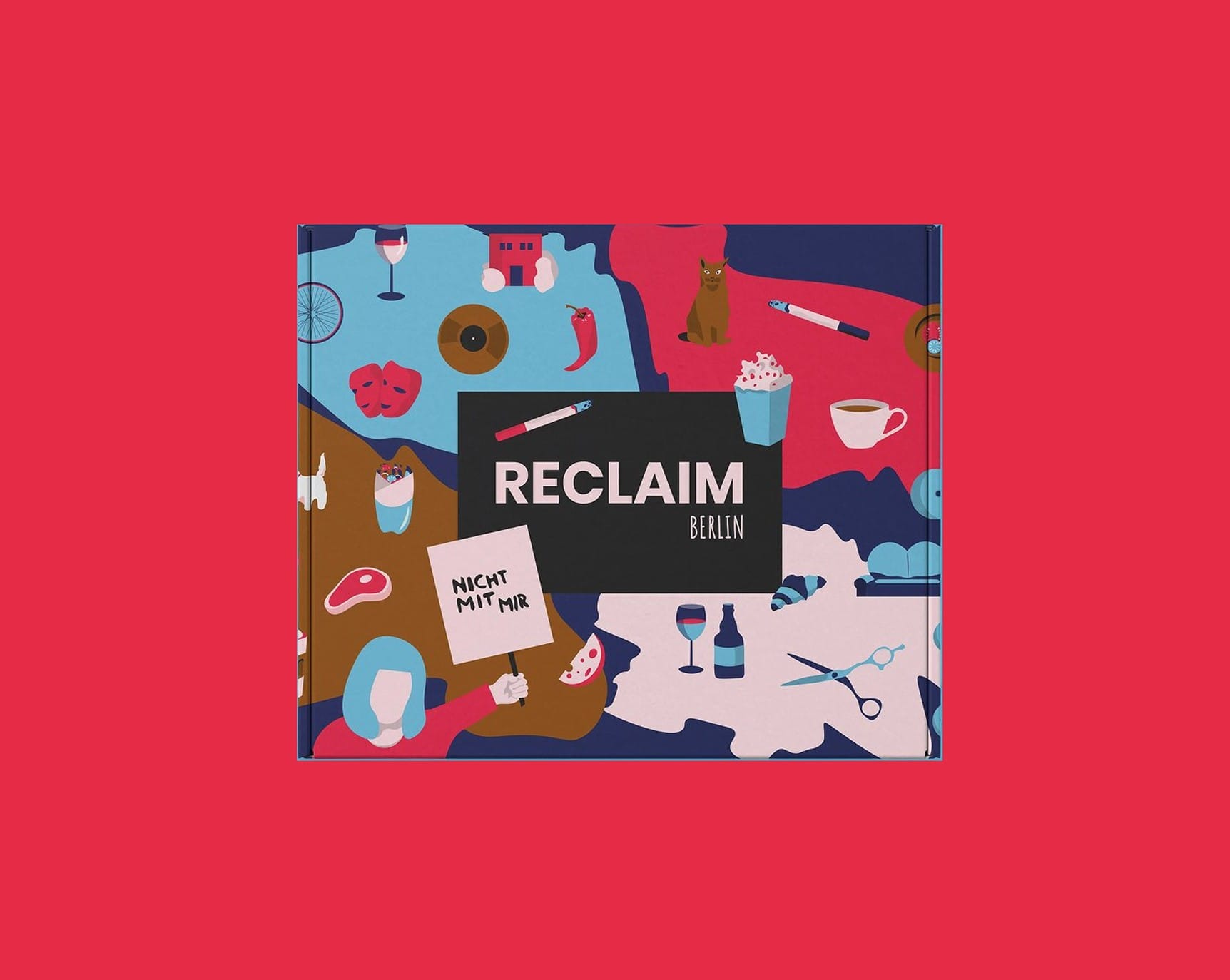
I created Reclaim Berlin, a cooperative board game about gentrification and urban change.
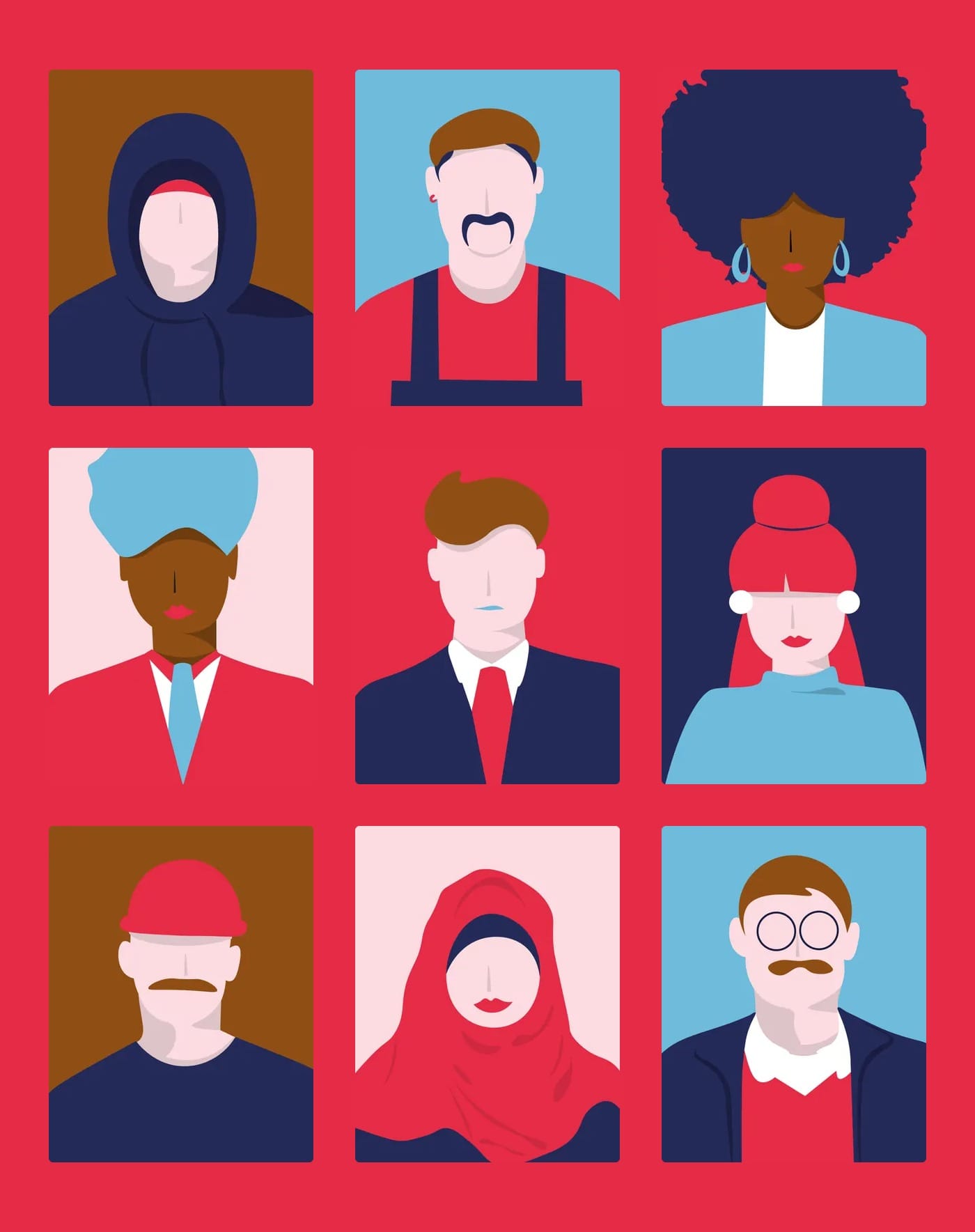
Players take on different community roles and work together to protect neighbourhoods from increasing rent prices and investor pressure.
Inspired by the collaborative mechanics of games like Pandemic, the project combined strategy, storytelling and visual design to make a complex topic more accessible and engaging.





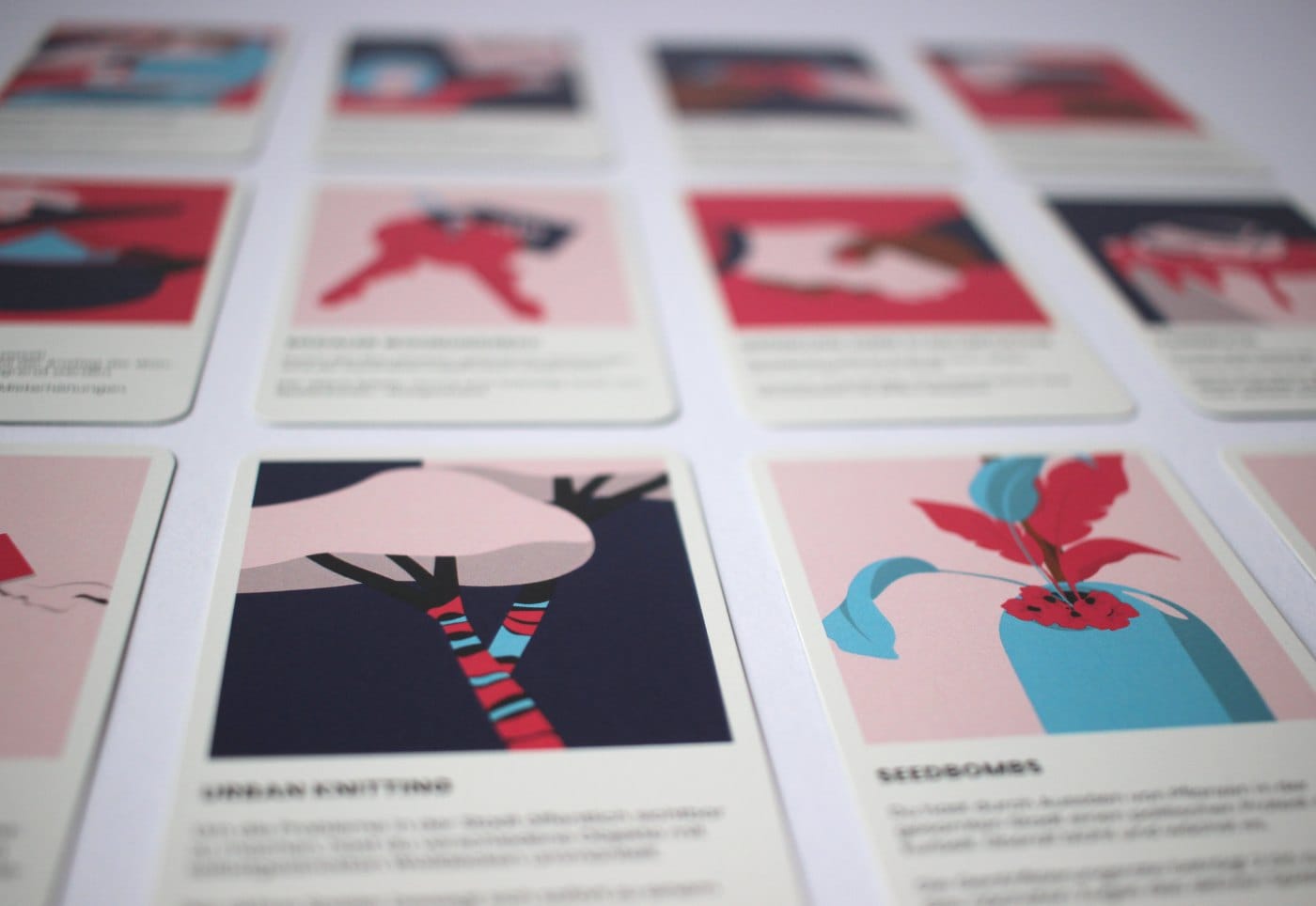
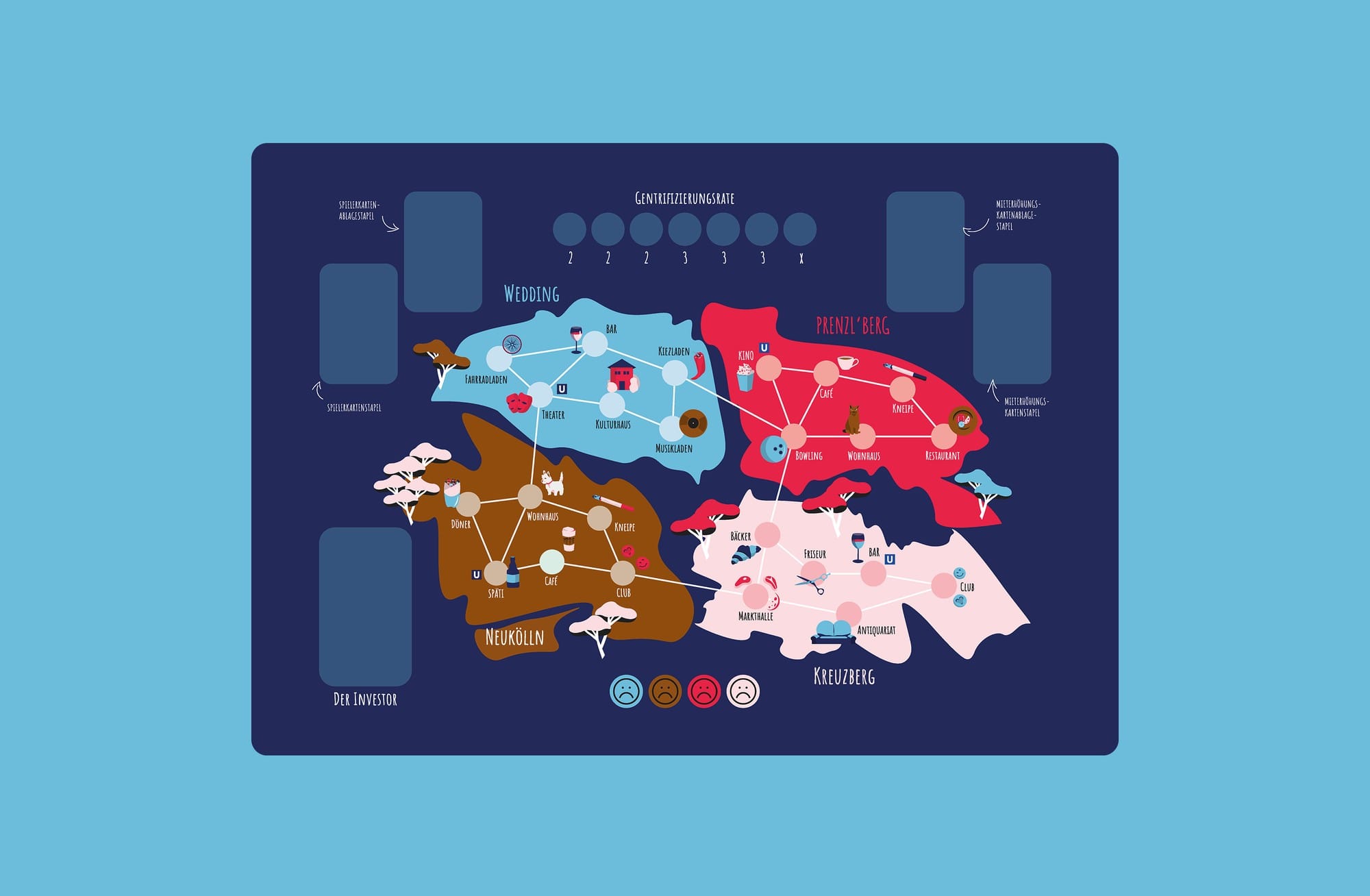
Explore the physical game
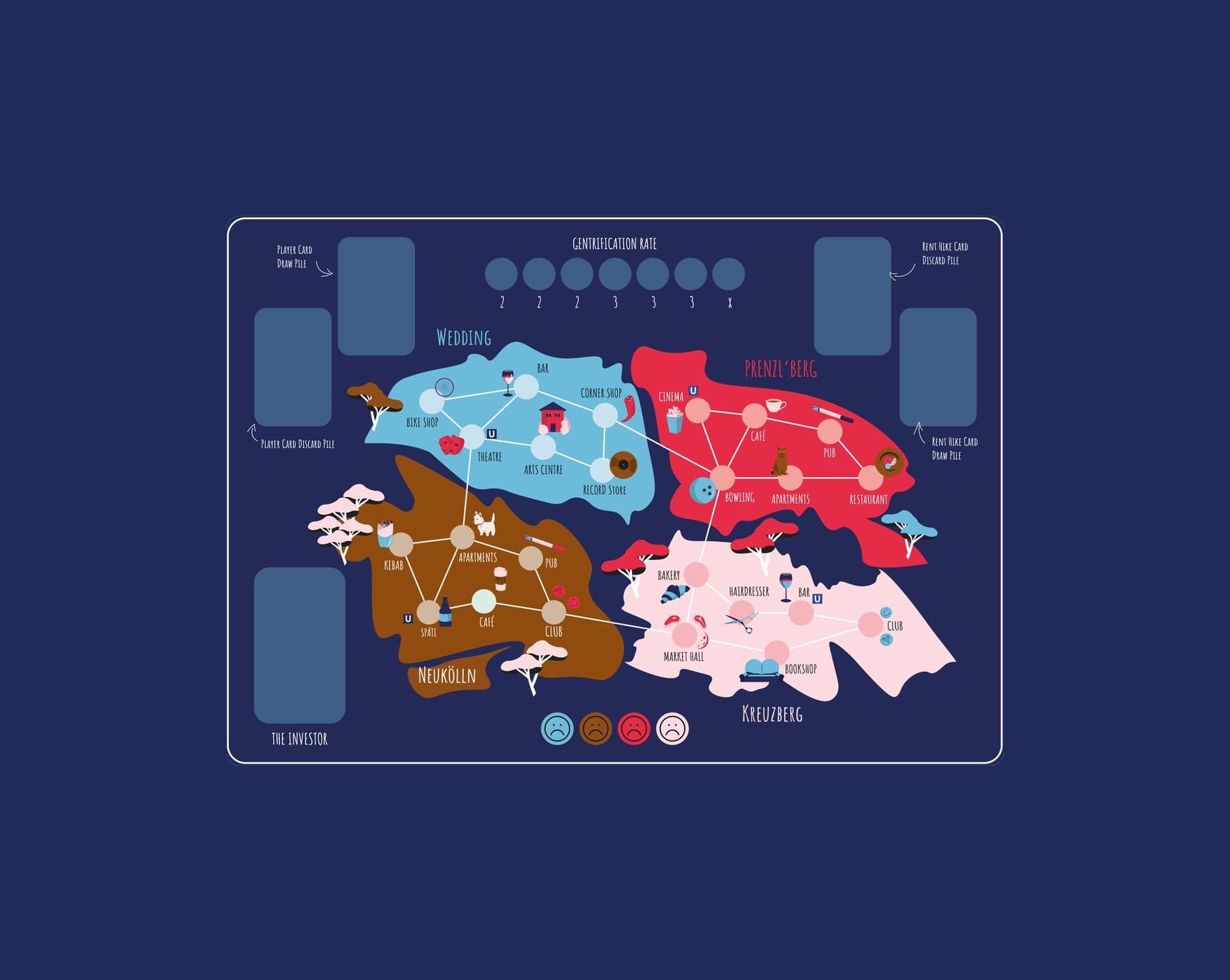
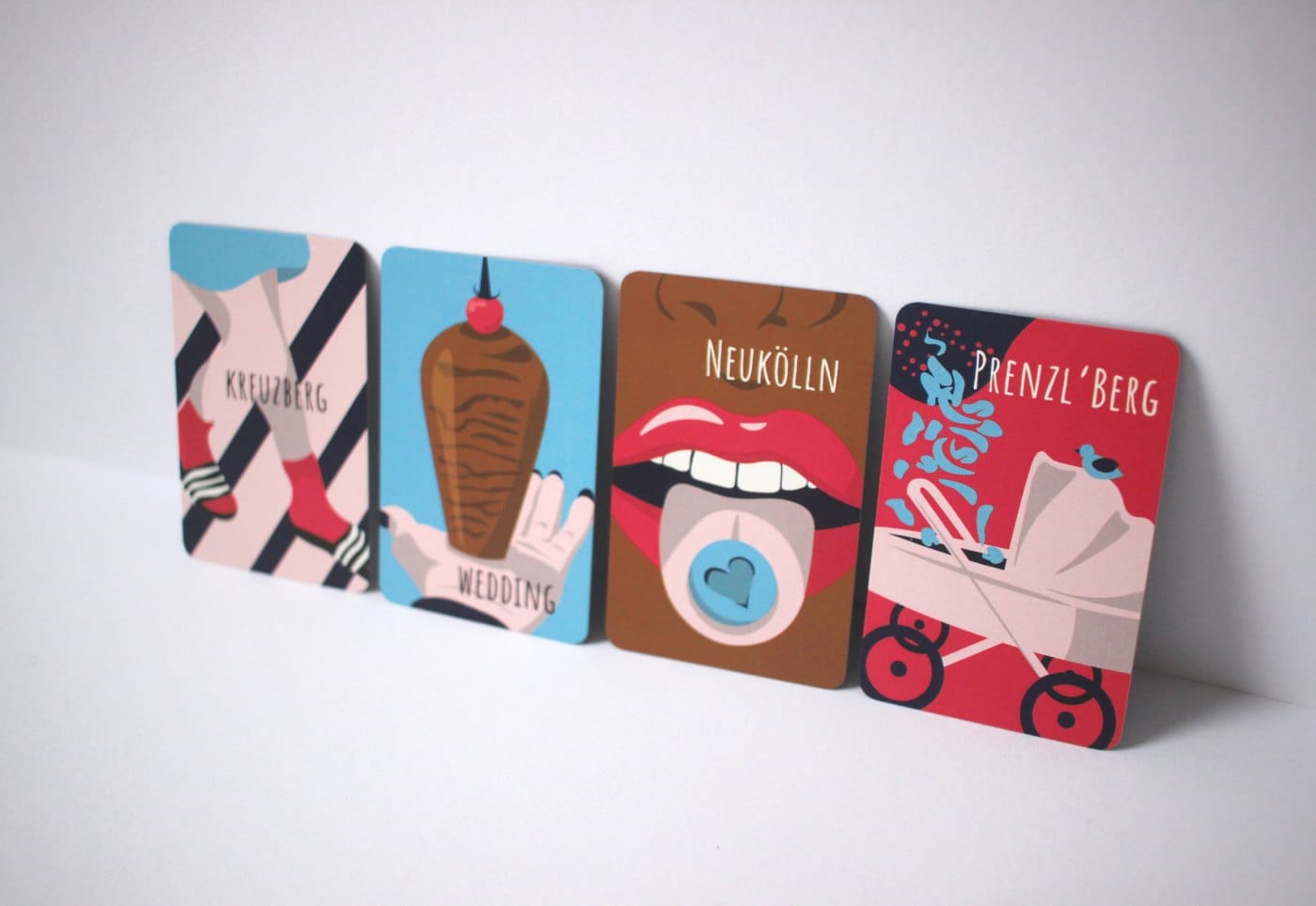
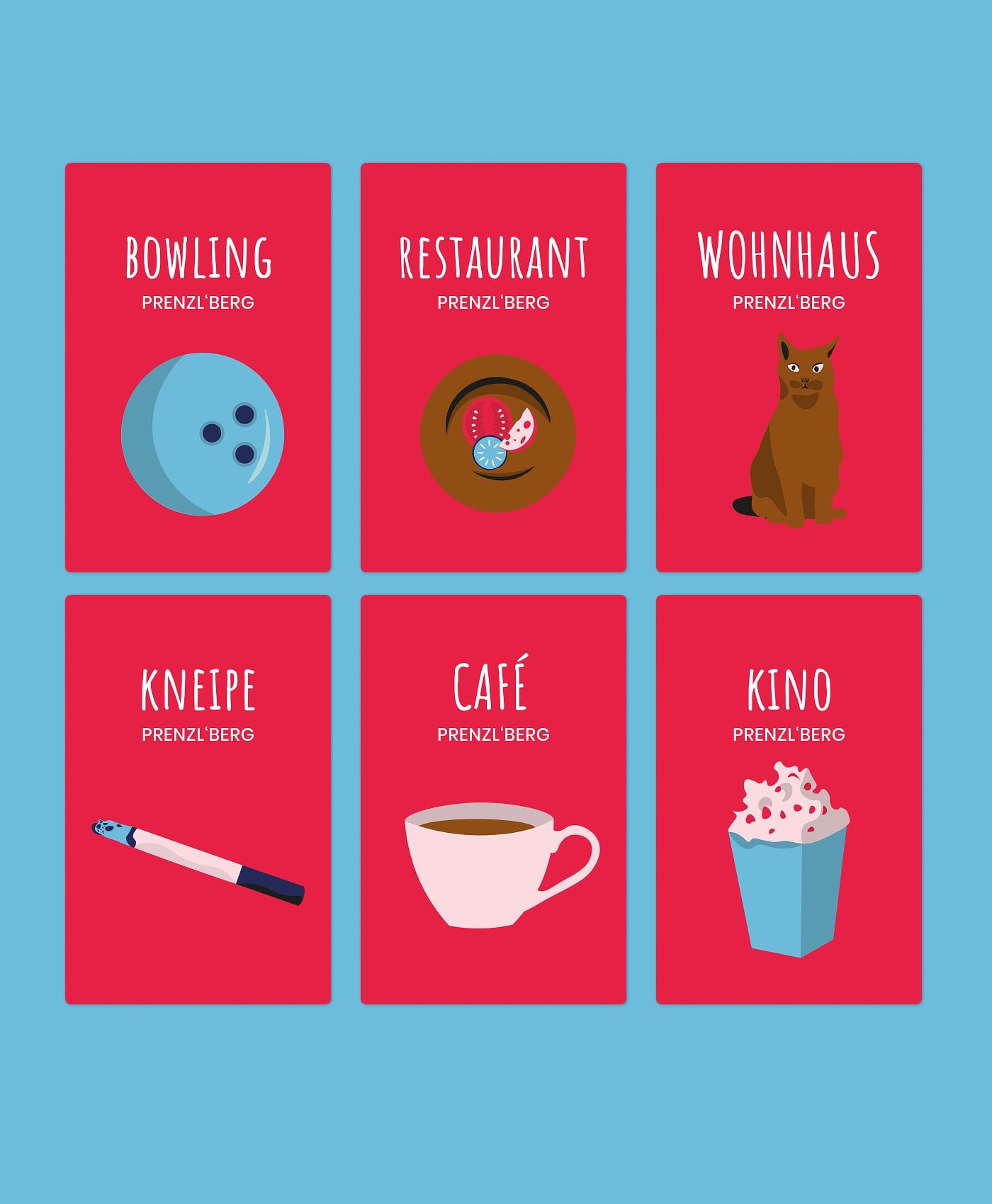
Tap around. The original explains itself without the manual: four districts, 24 places, nine roles, and cards that carry real protest and policy tools.
The printed game is in German. The question marks translate the board.
The challenge
Reclaim Berlin was originally designed for people sitting around the same table.
Players could see the board, follow conversations, move pieces manually and look up rules together.
Moving the game online raised new questions:
How do players learn a system with nine roles and dozens of cards?
How do they understand what happens when nobody is physically at the table?
How do they stay aware of turns, actions and game state?
How do we preserve the identity of the original board game while making it easier to play?
From physical to digital
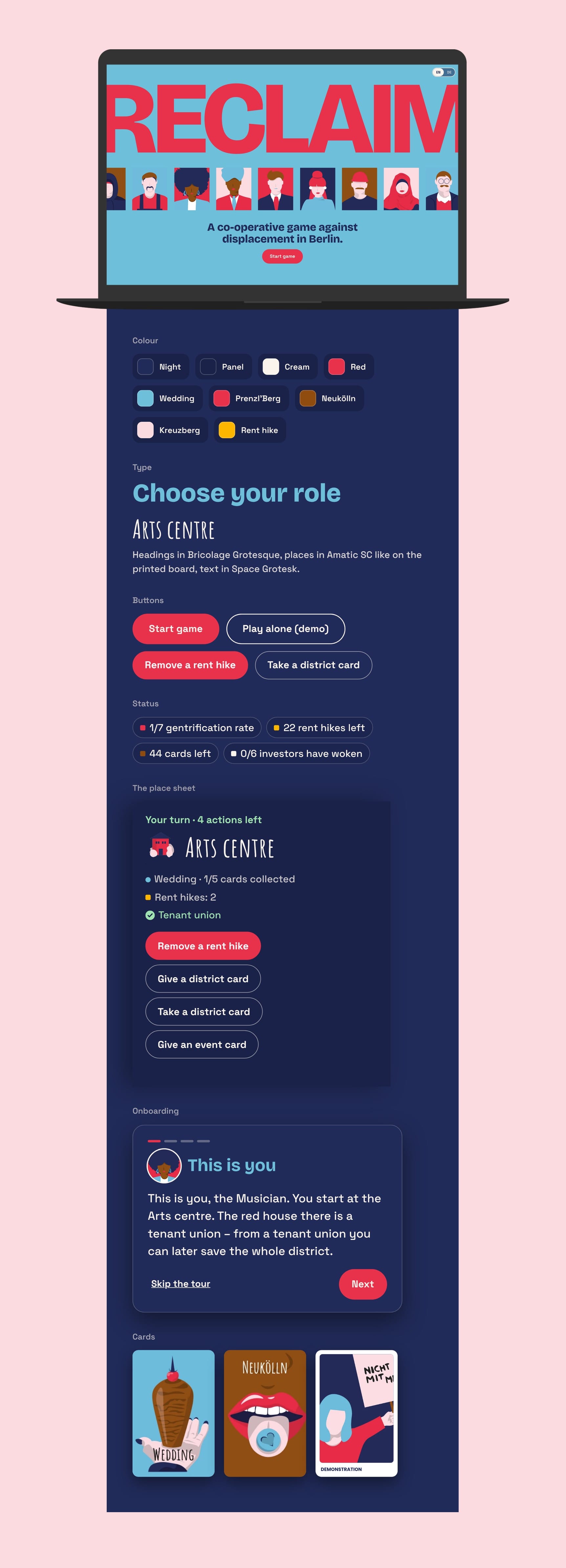
Every part of the printed game had to find a place on the screen.
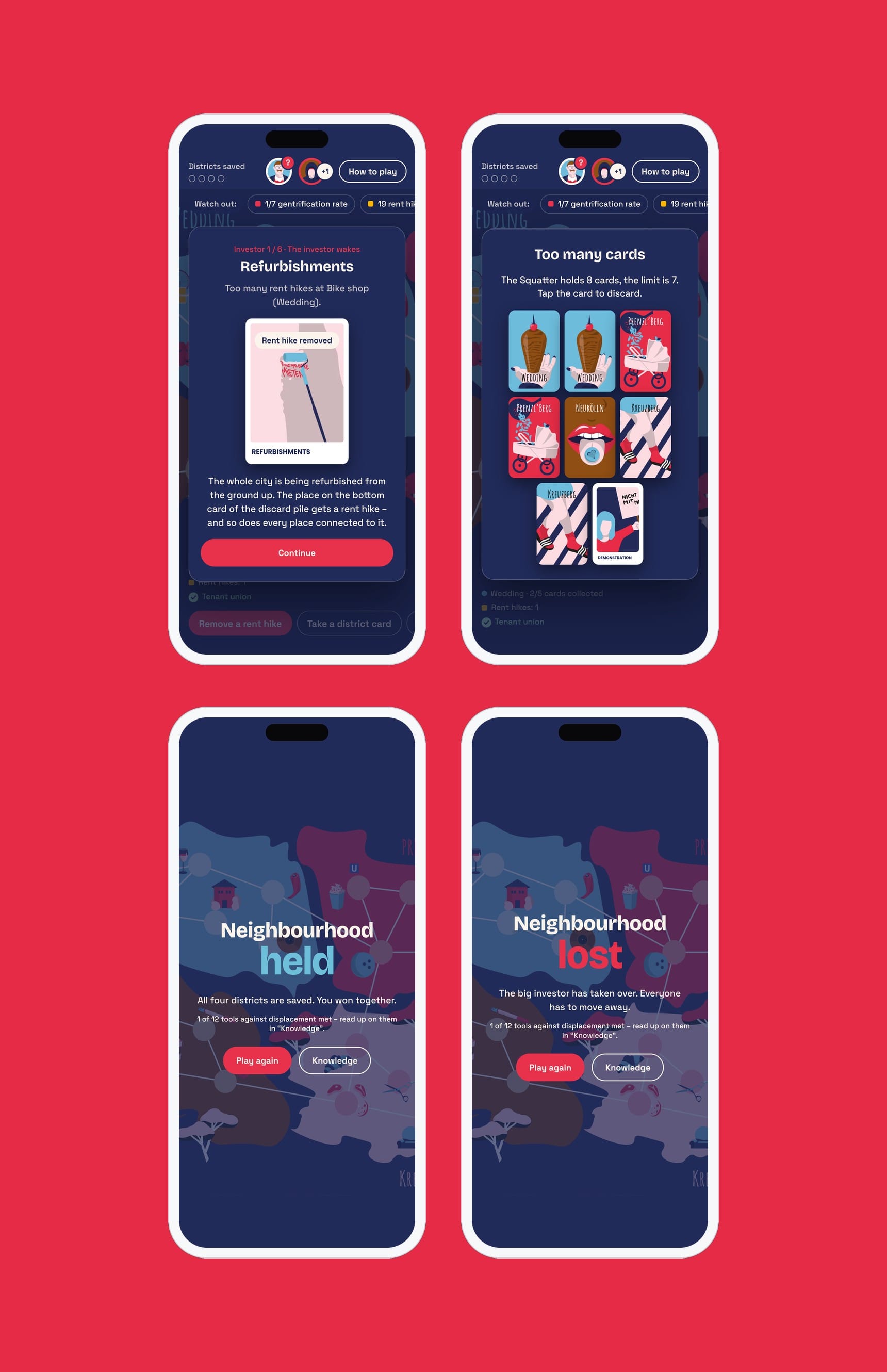
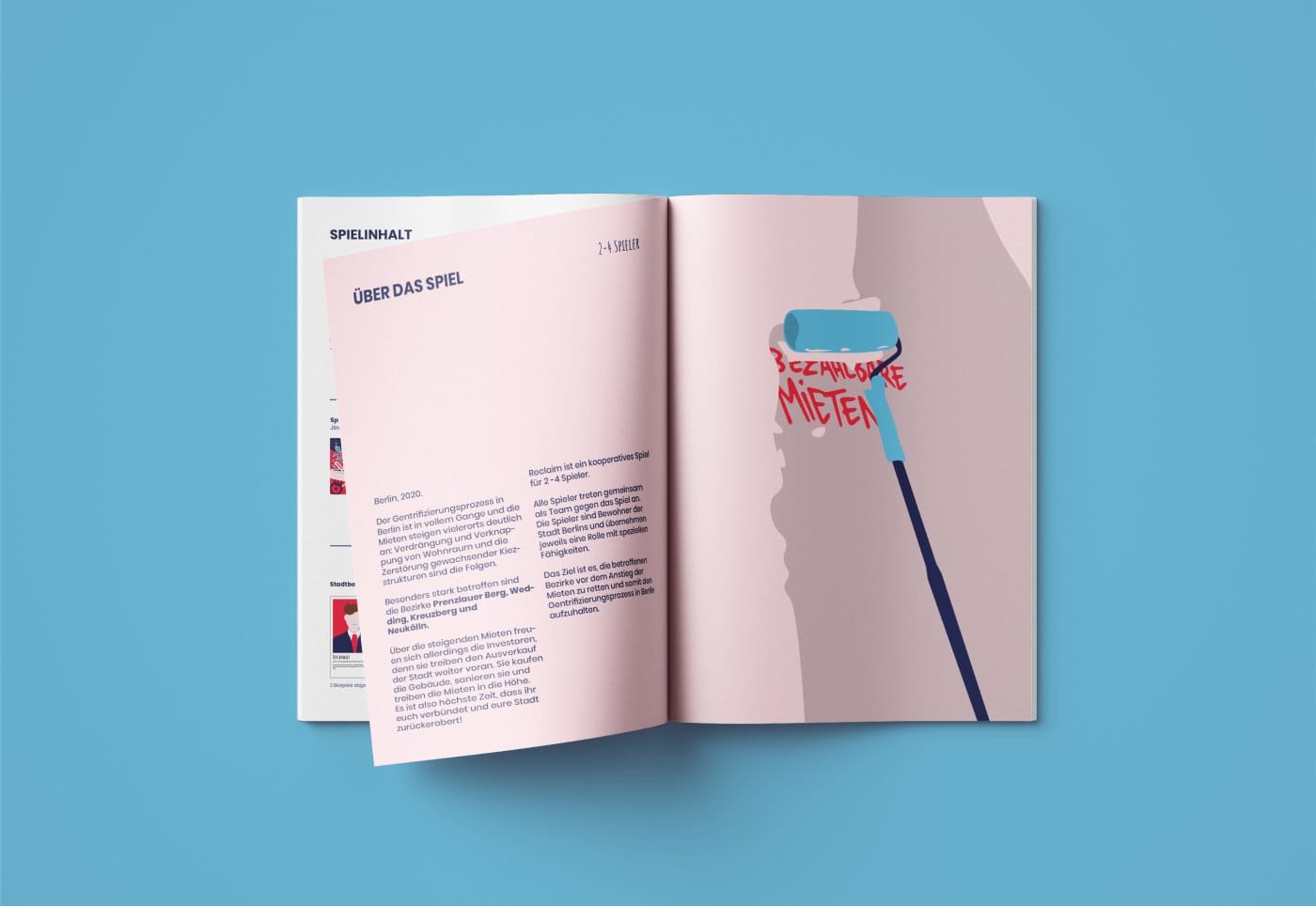
The physical game relies on a printed manual. In the digital version, rules become part of the experience through guided onboarding, contextual tips and a knowledge section.
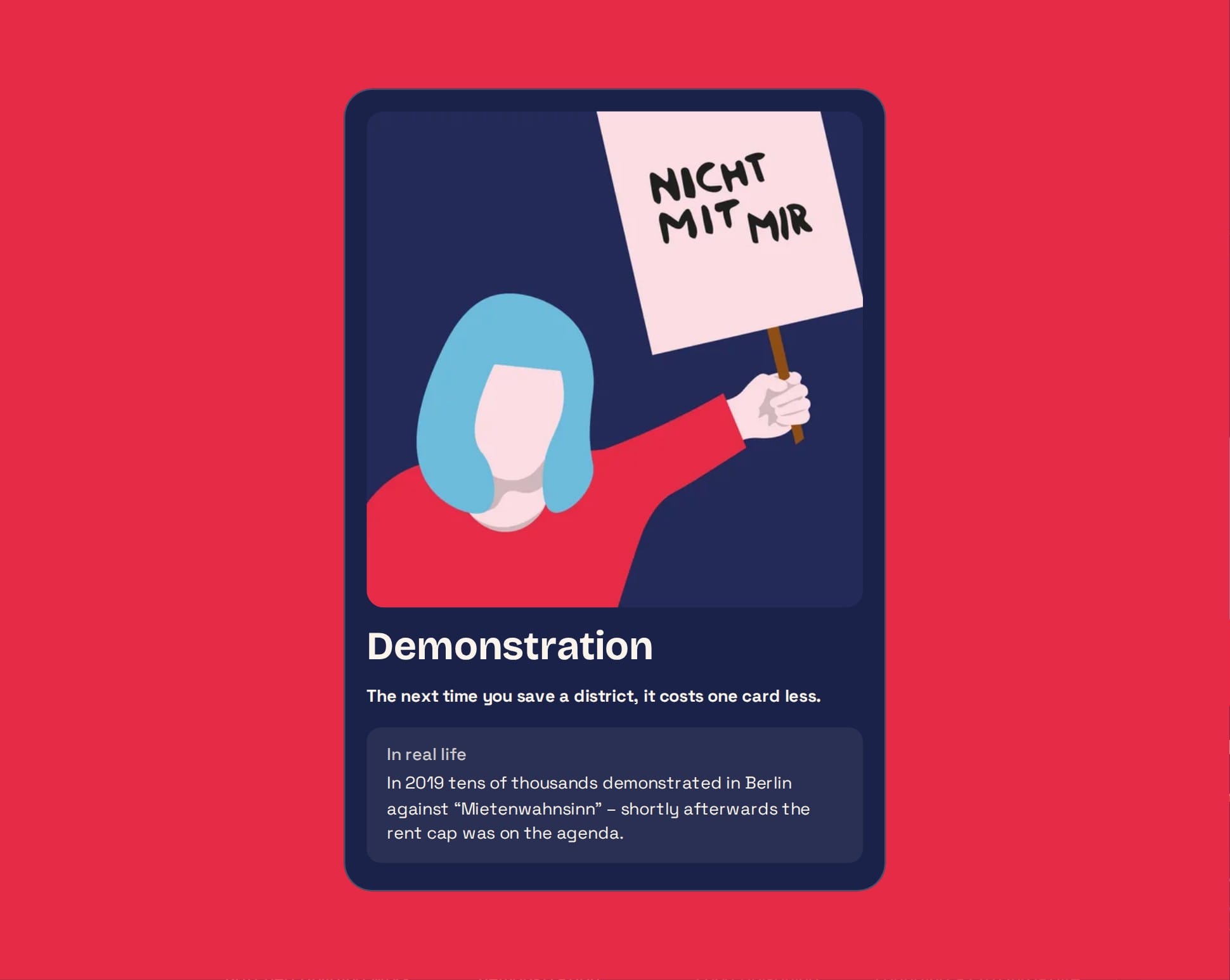
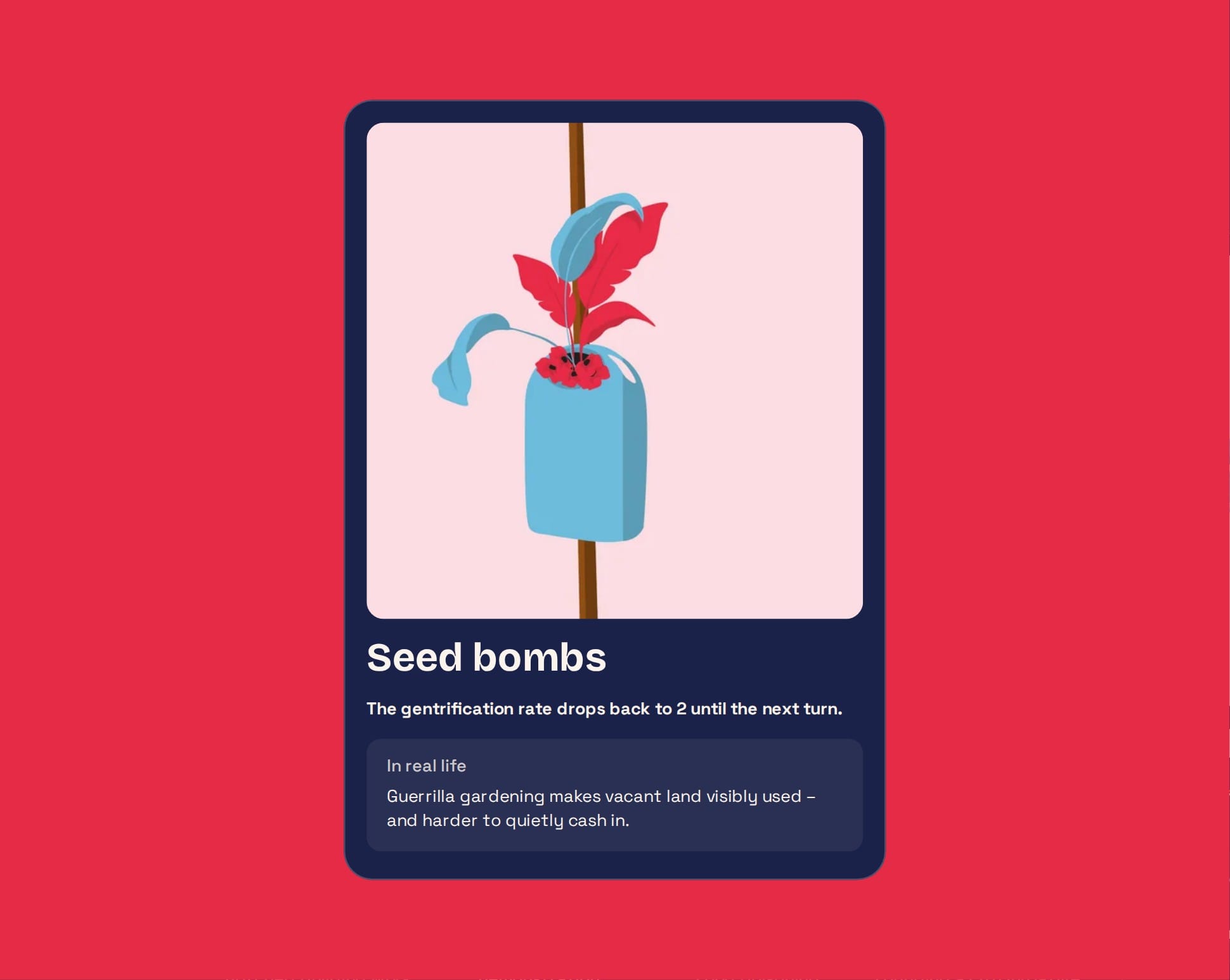
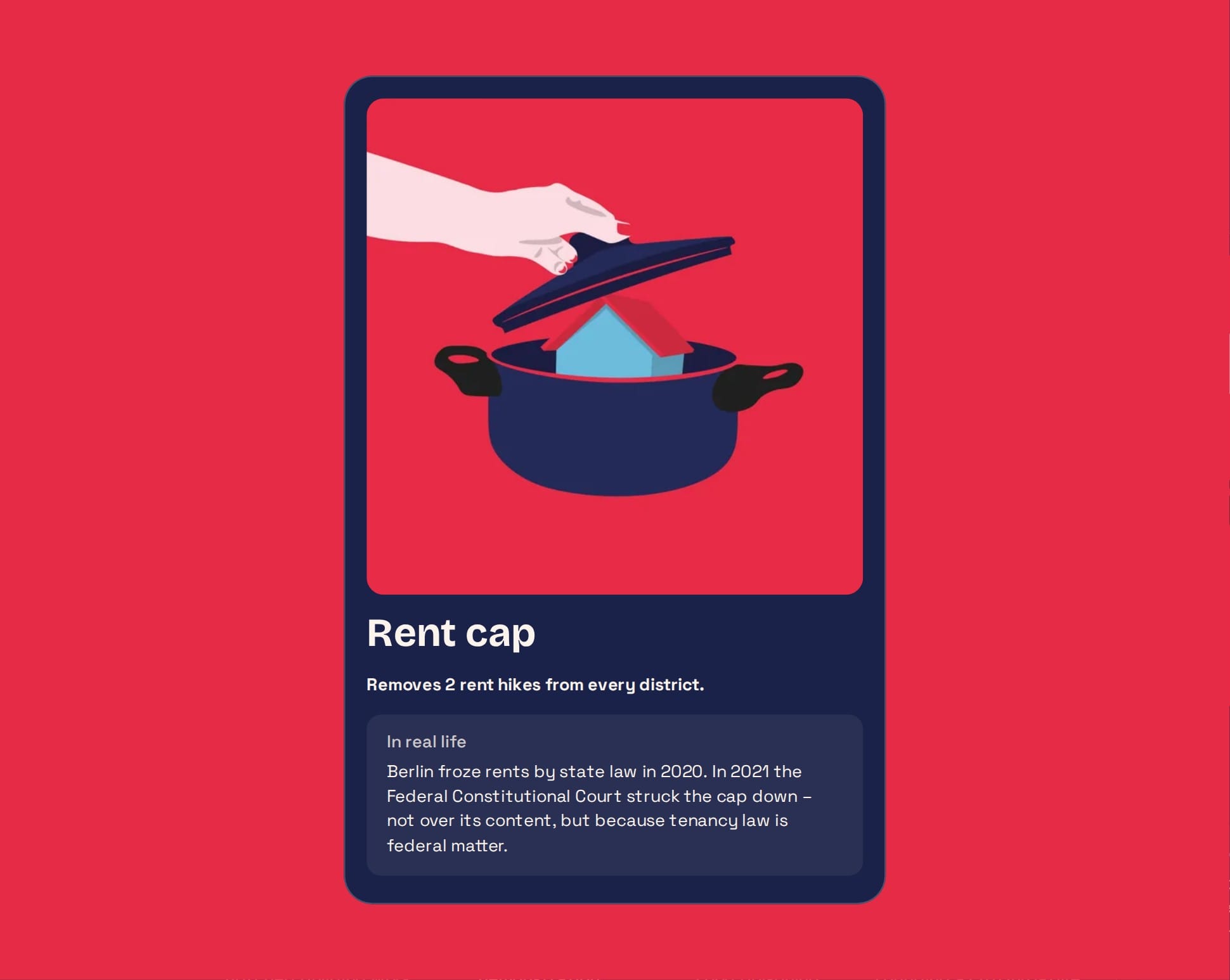
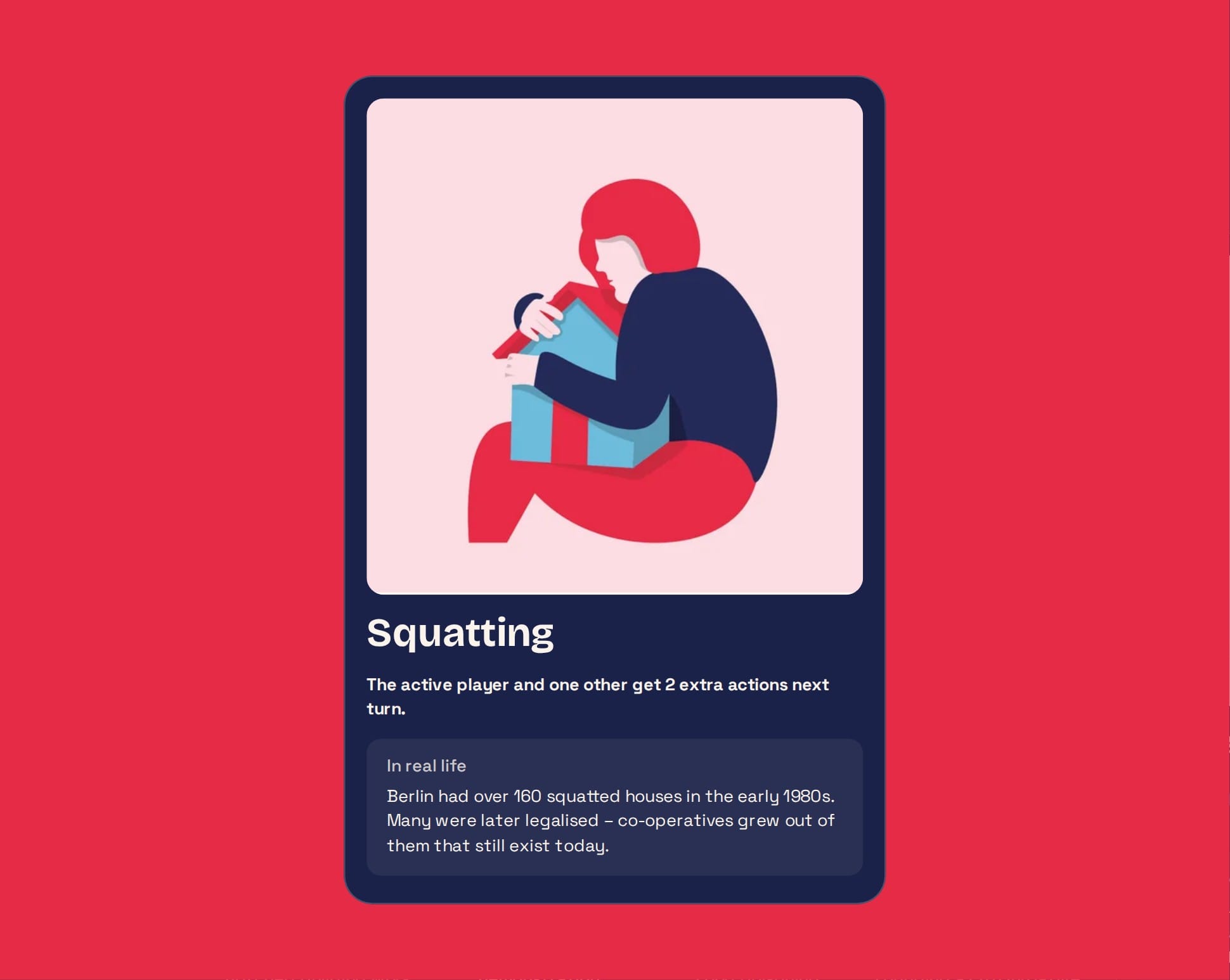
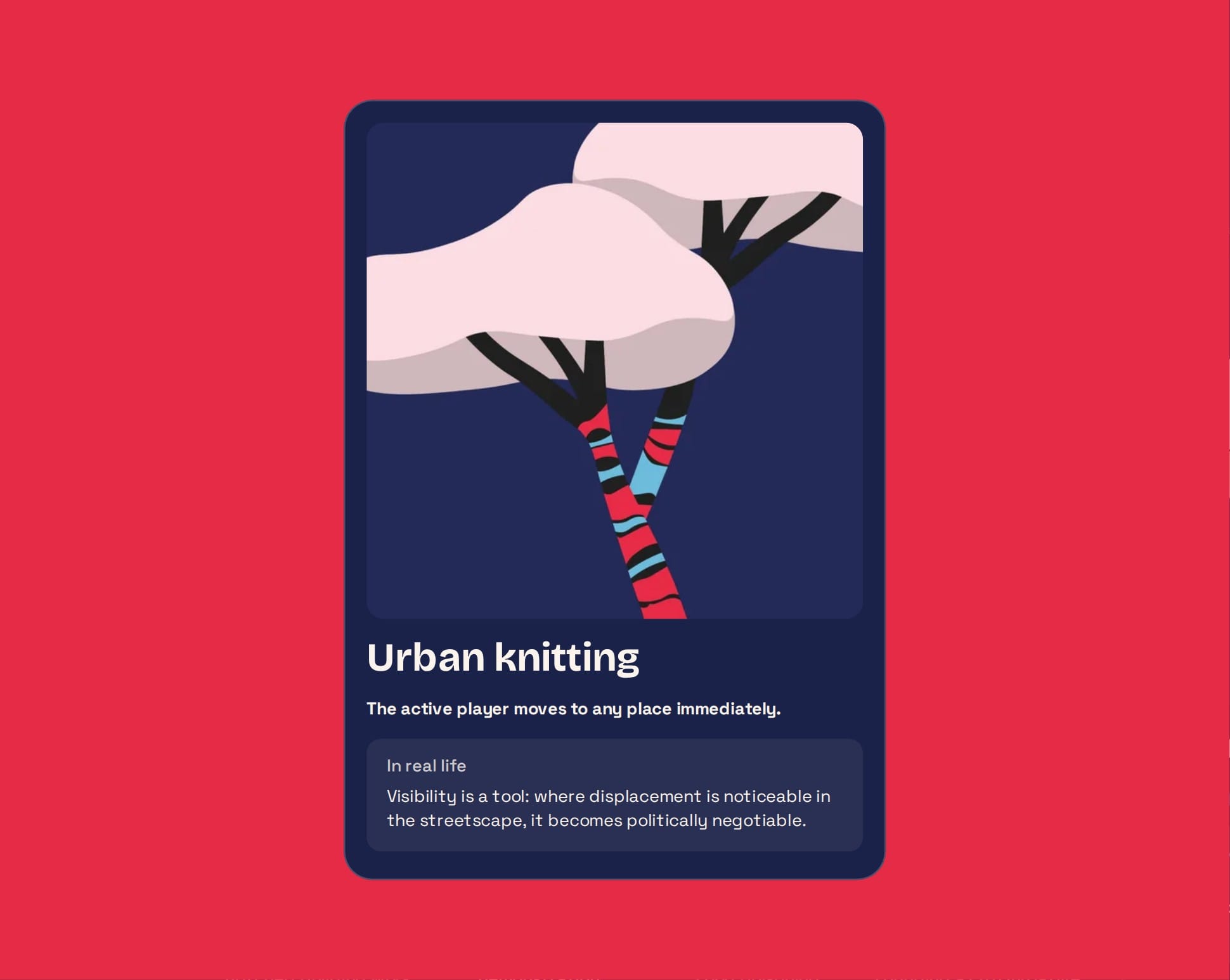
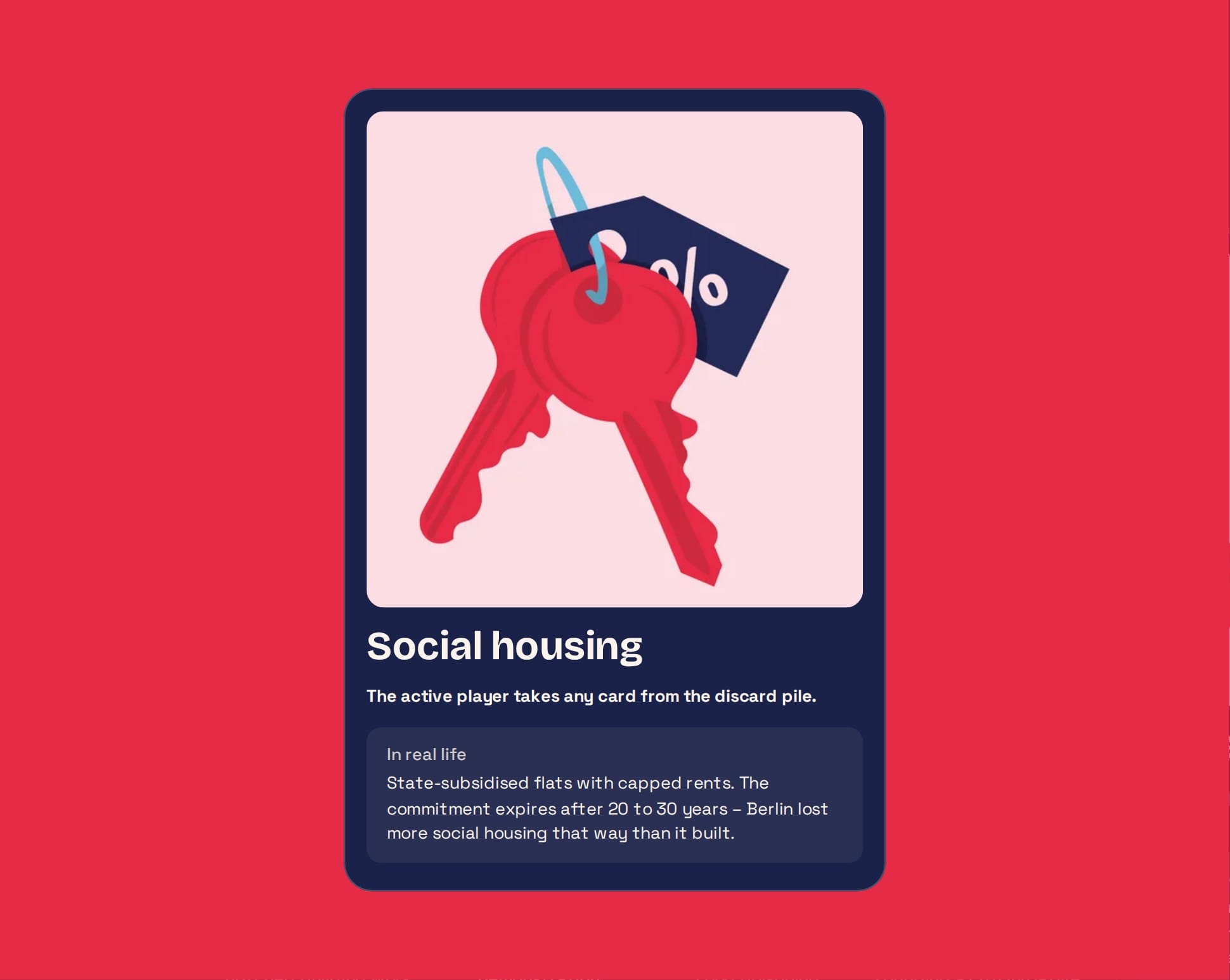
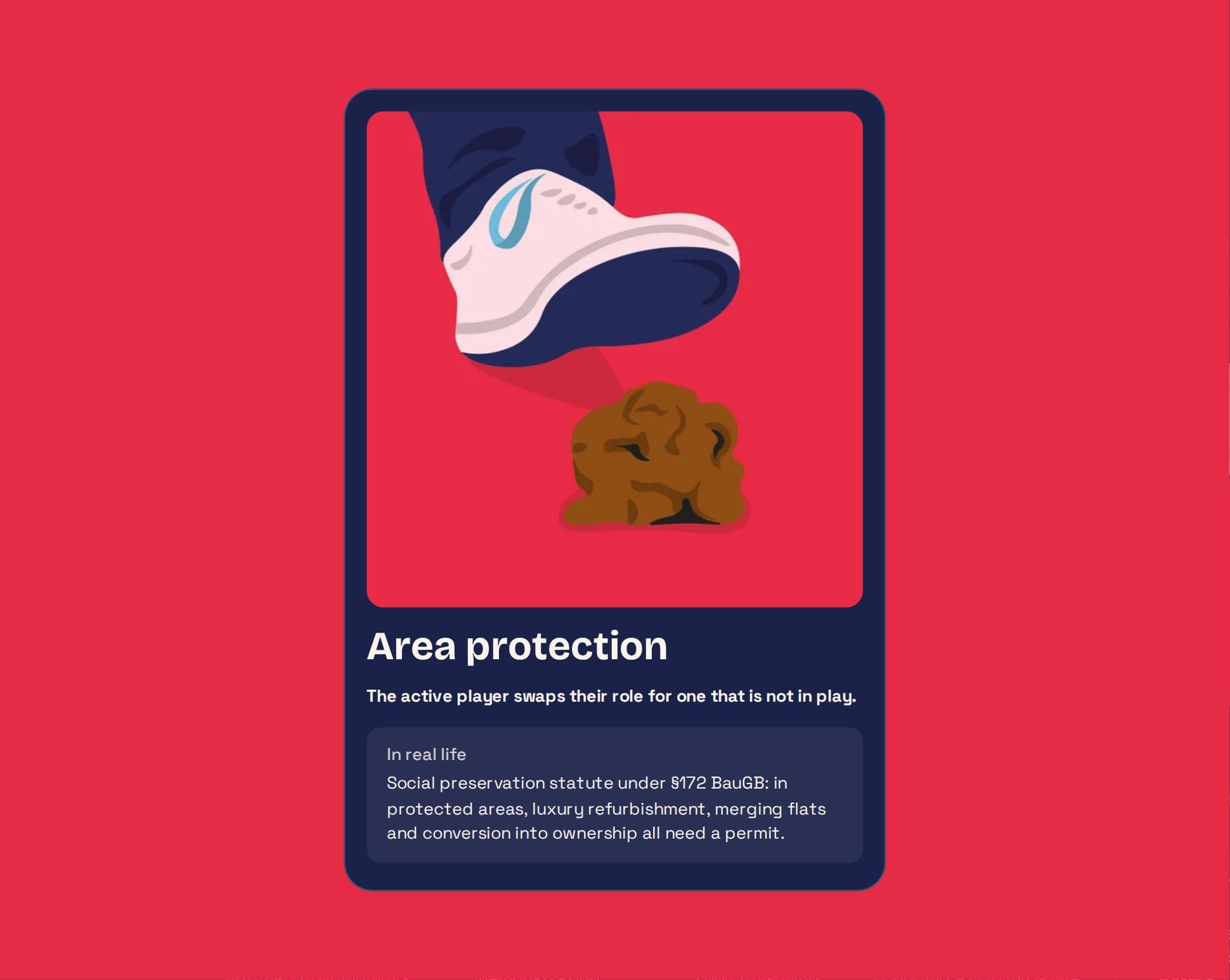
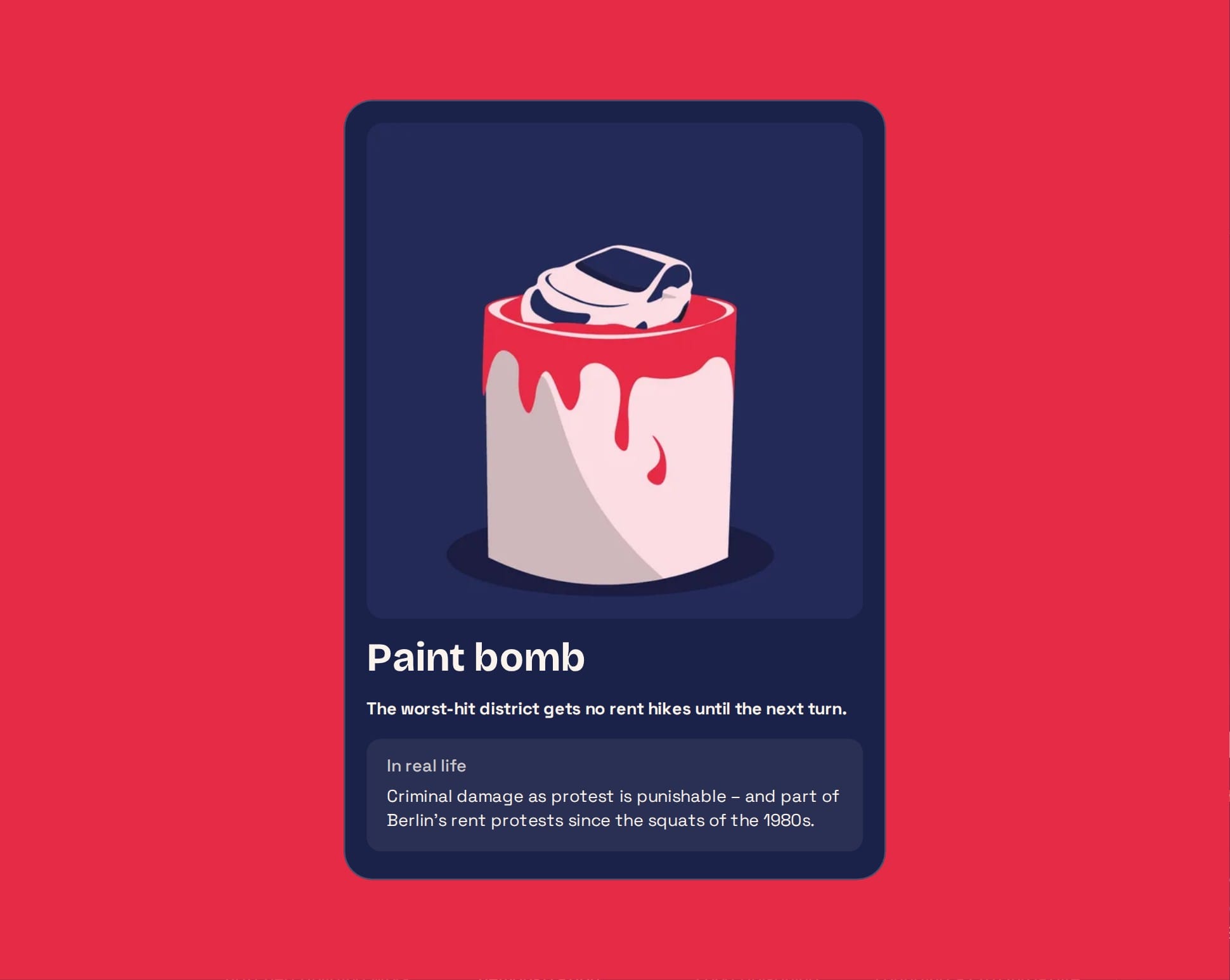
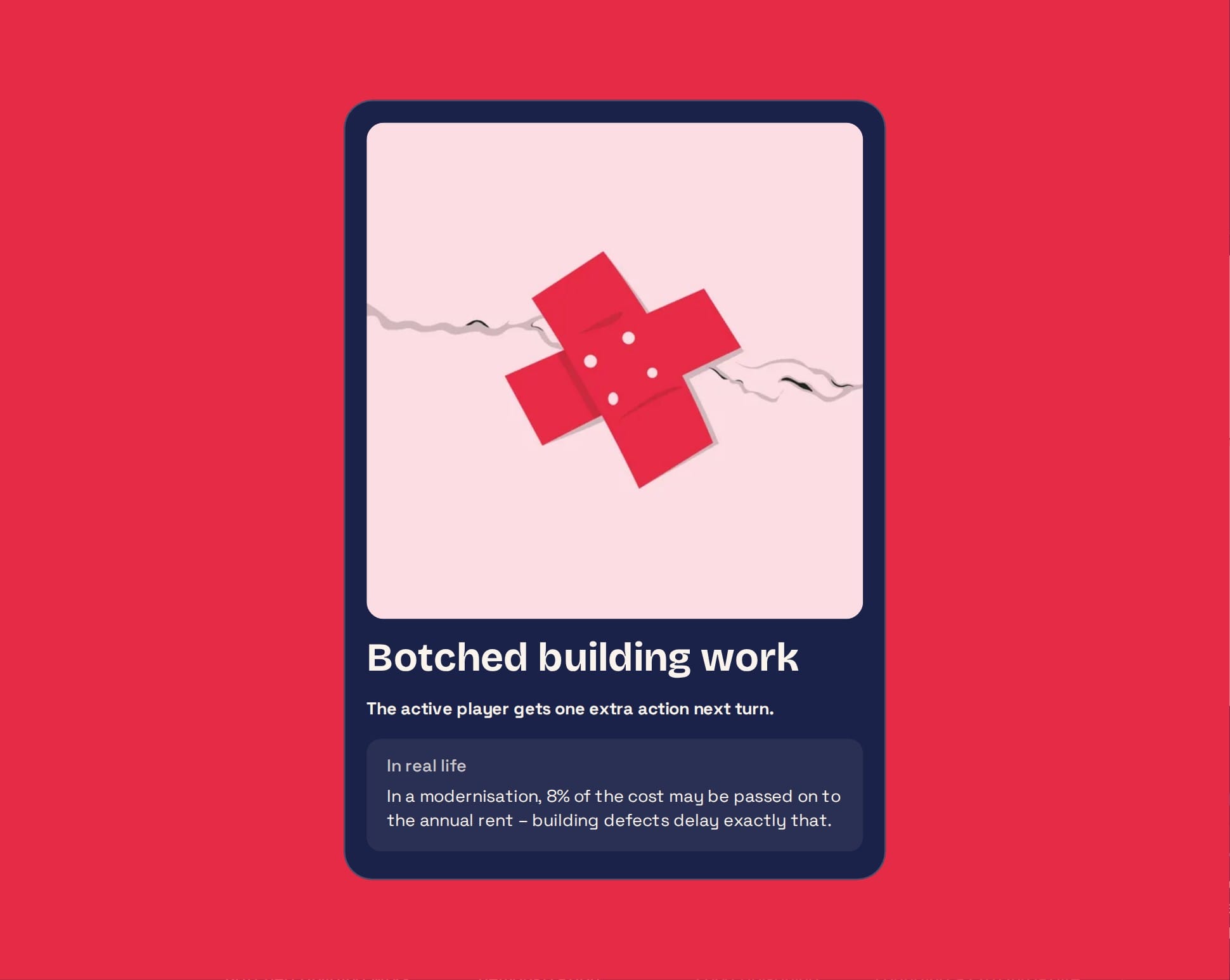
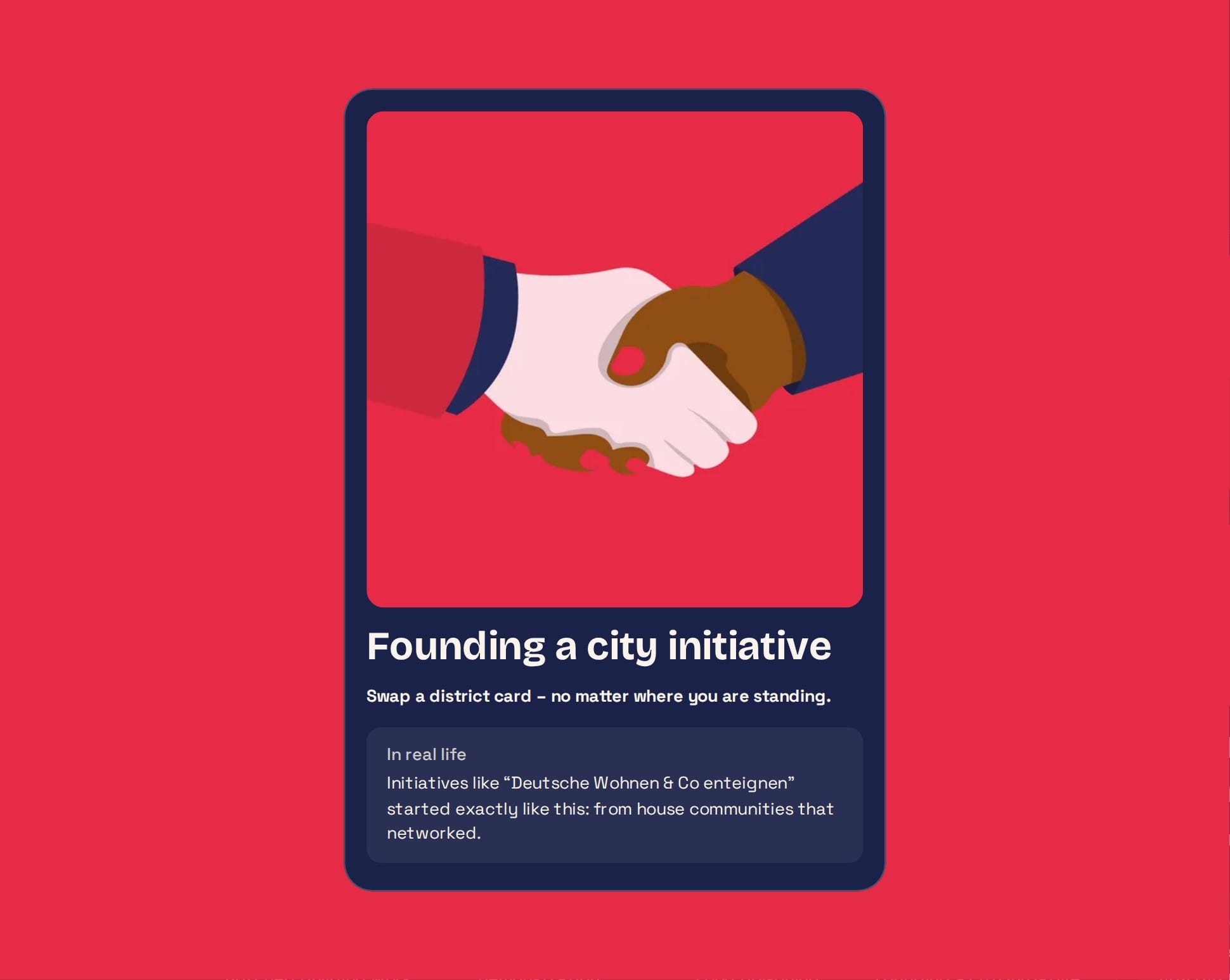
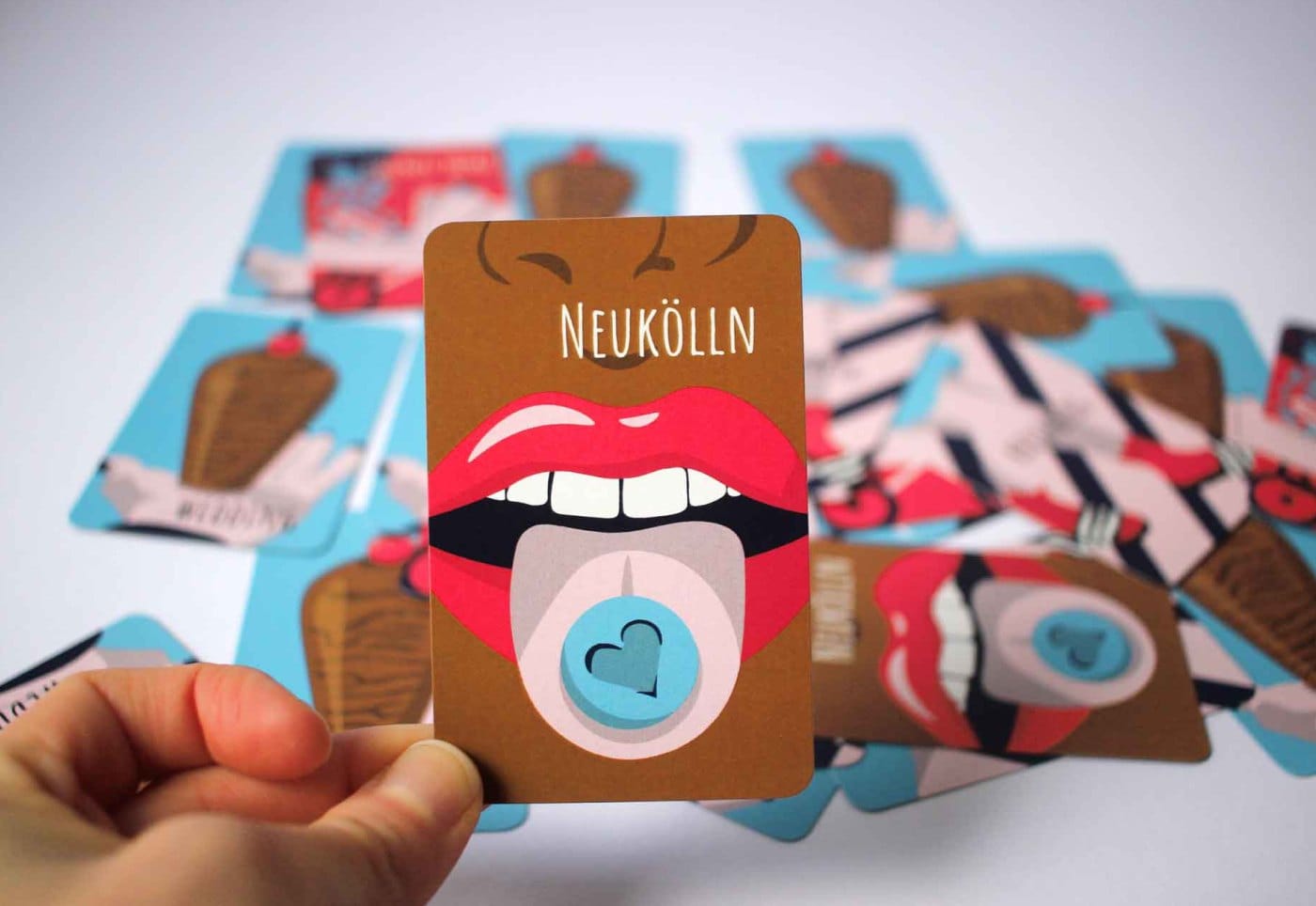
The game contains dozens of action and event cards. In the digital version, cards retain their familiar format while allowing players to reveal additional information through a simple flip interaction.
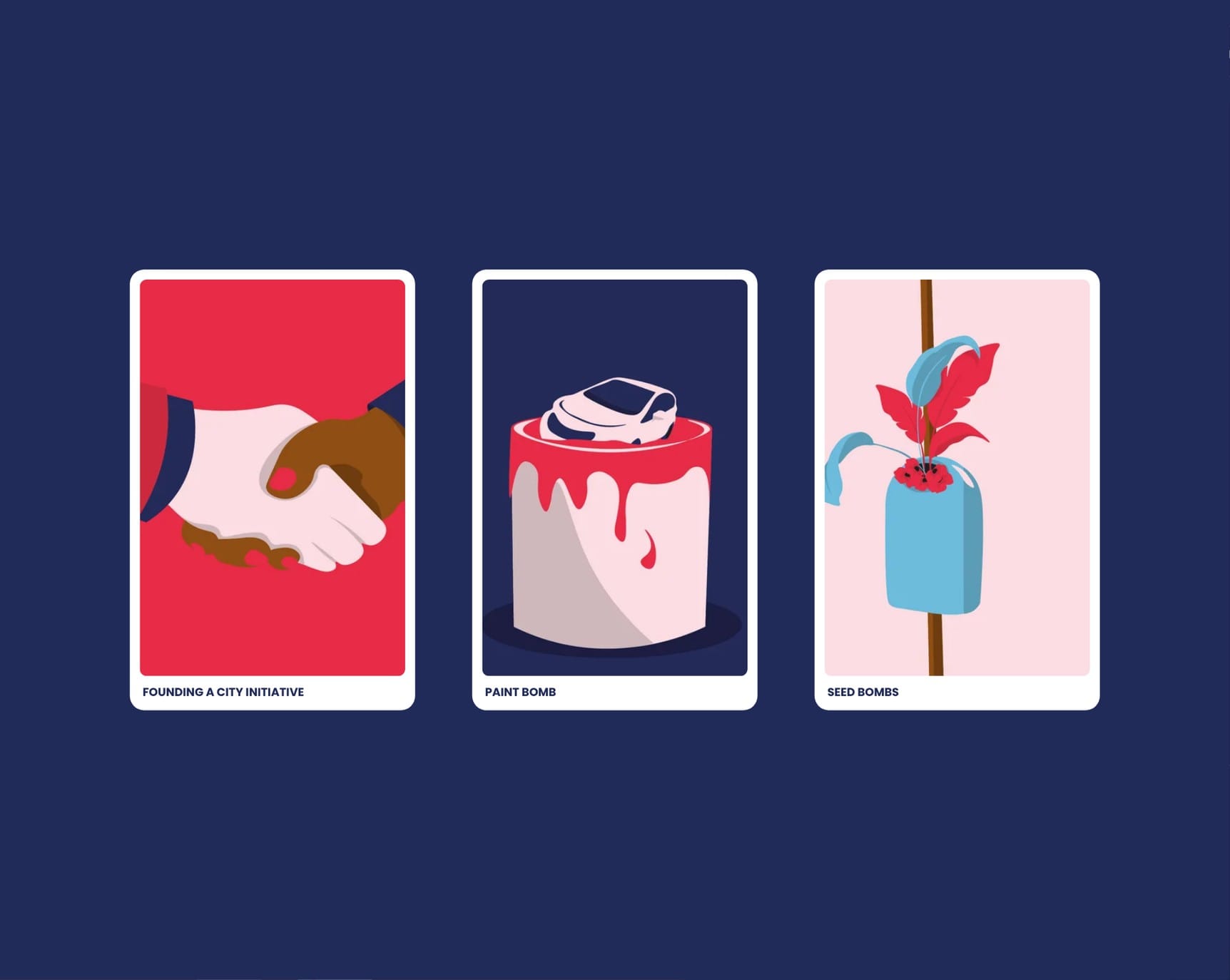
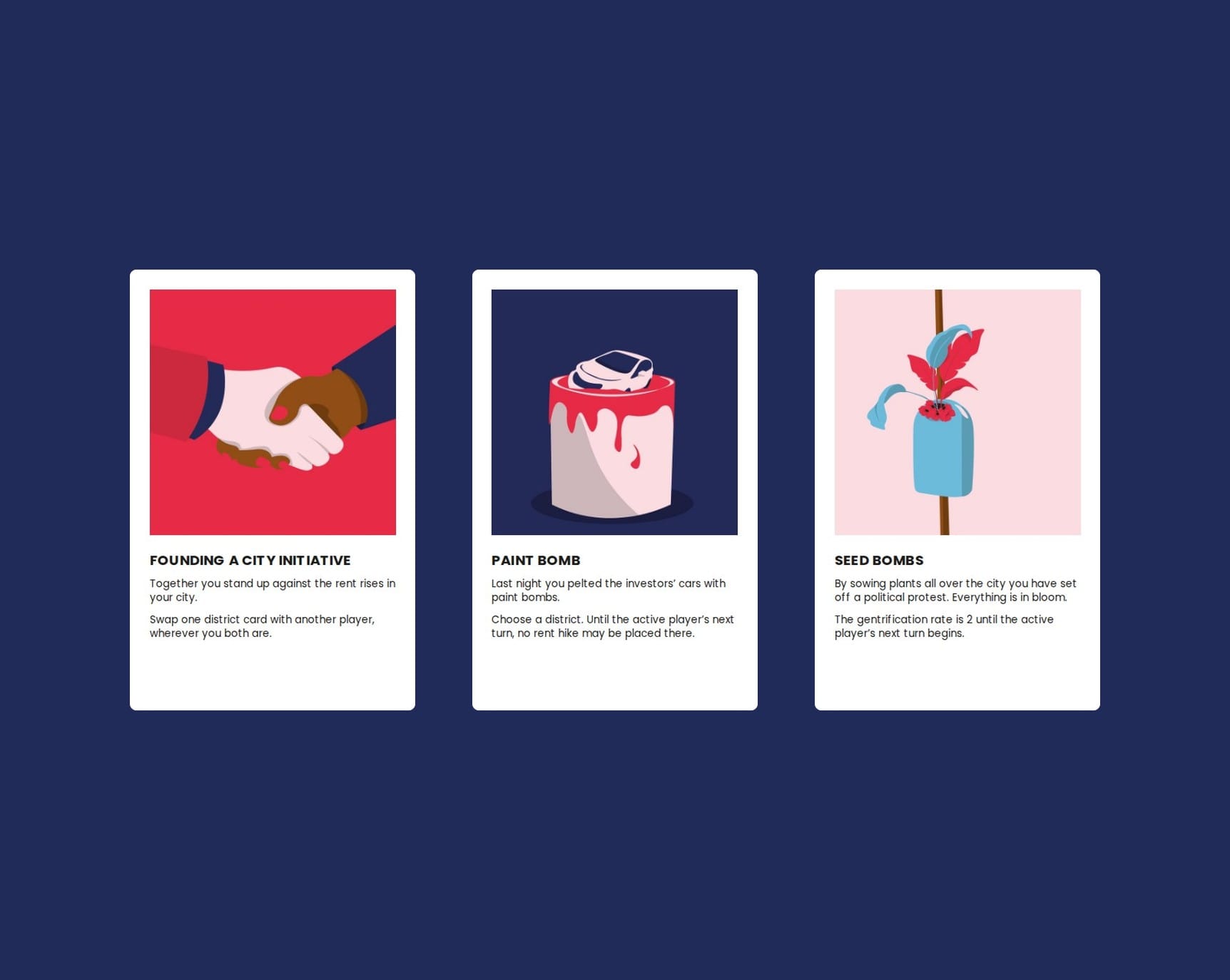
Decision 1 · Adapting the board for smaller screens
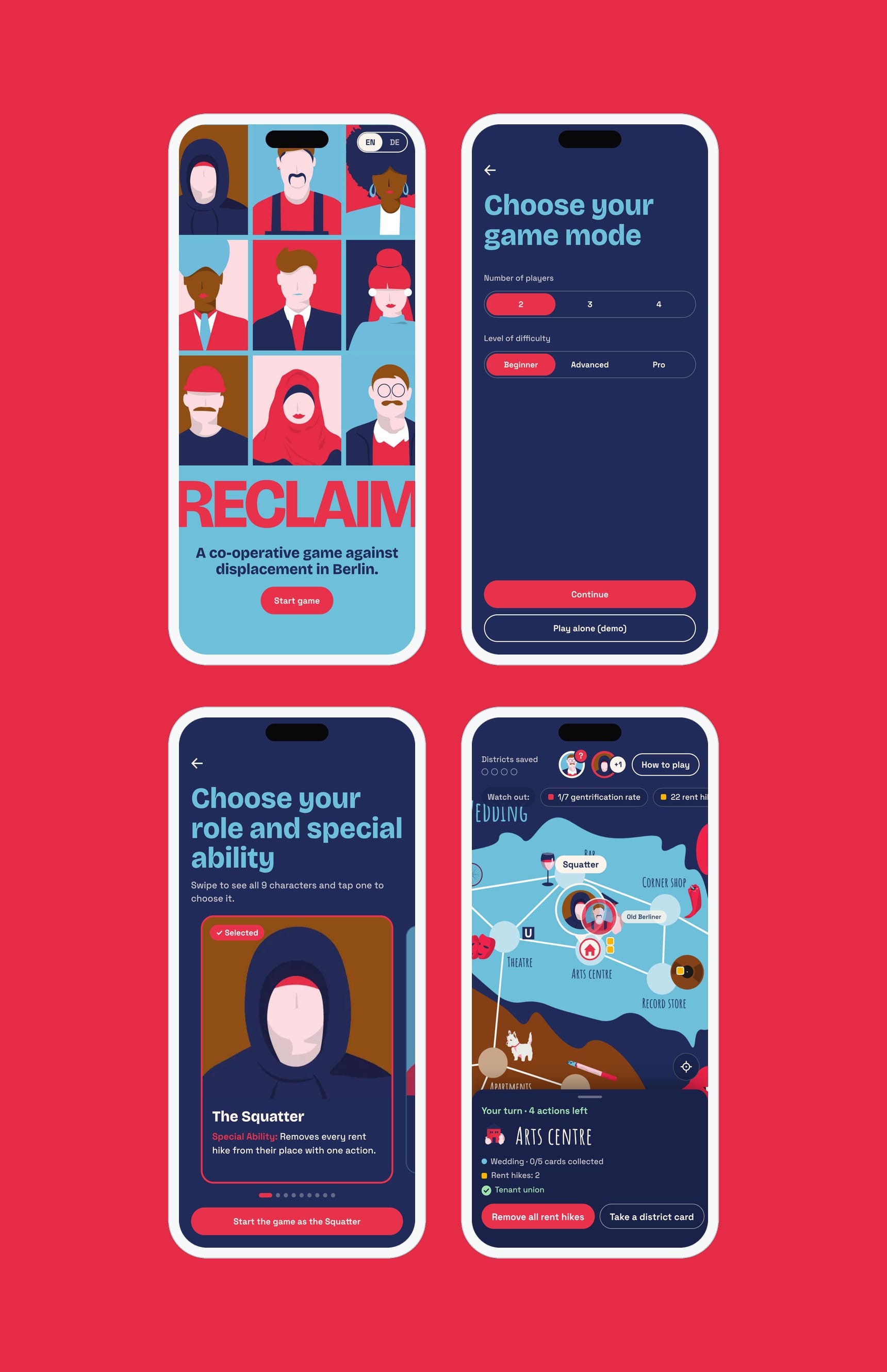
ChallengeThe original game board was designed for a tabletop experience. On mobile devices, the complete board became too small to navigate comfortably.
DecisionInstead of showing the entire map at once, the experience focuses on a single district at a time. Navigation cues and visual anchors help players understand how locations connect across the city.
ResultImportant information stays readable without sacrificing the identity of the original board.
Decision 2 · Bringing Learning into the Game
ChallengeHow do you translate the educational aspects of the board game into a digital experience?
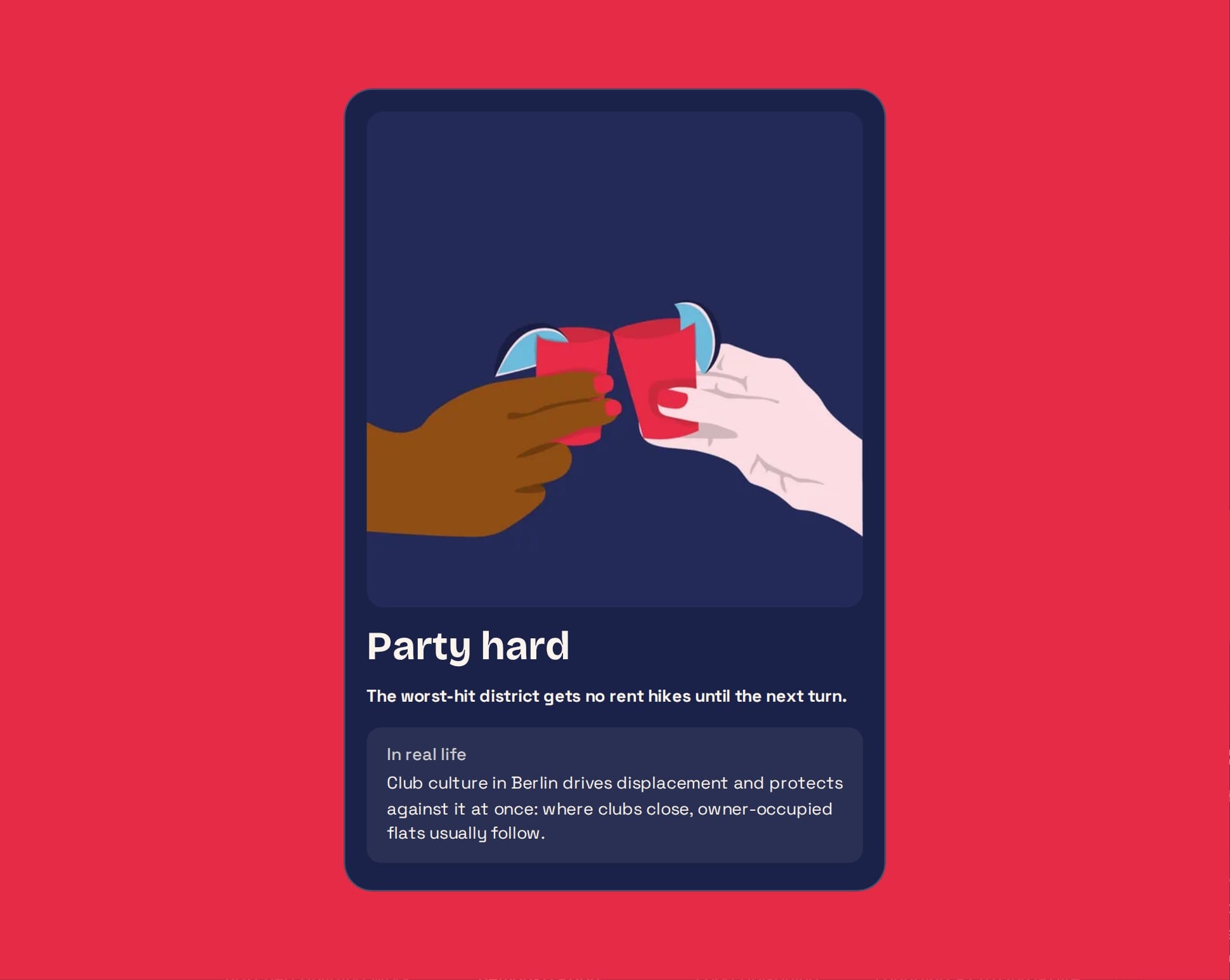
DecisionInstead of placing educational content directly on the cards, I moved it into a dedicated Knowledge section that players can access whenever they want to explore a topic in more detail.
ResultPlayers can learn about the social dynamics of gentrification while playing, without interrupting the flow of the game.


Building the game
After designing the physical version, I explored how AI could accelerate the transition into a playable digital product.
I defined the game mechanics, interaction patterns and UX decisions, while Claude helped generate implementation variants and turn ideas into working prototypes.
This allowed me to quickly evaluate different approaches, iterate on interactions and focus on product decisions rather than implementation details.
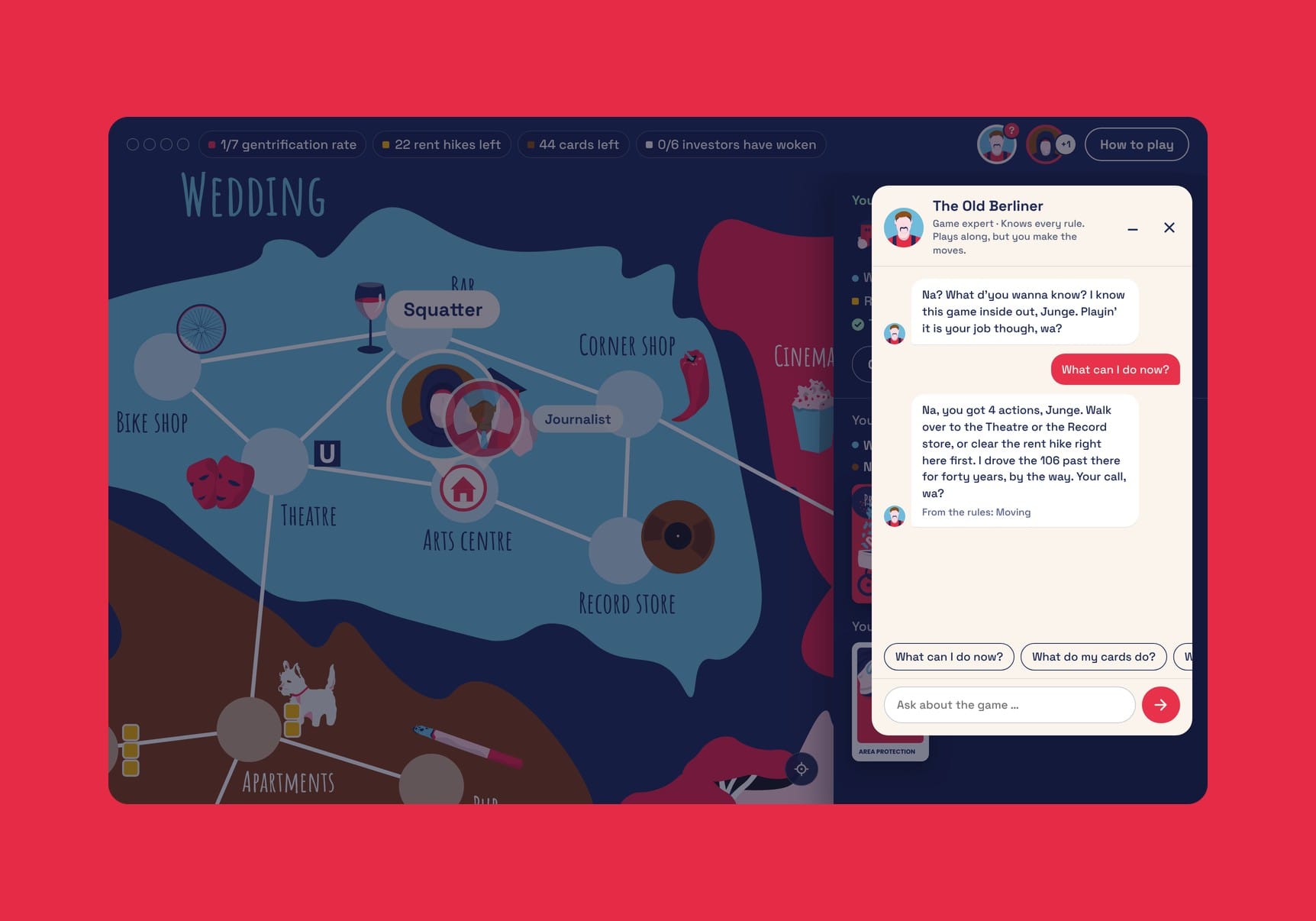
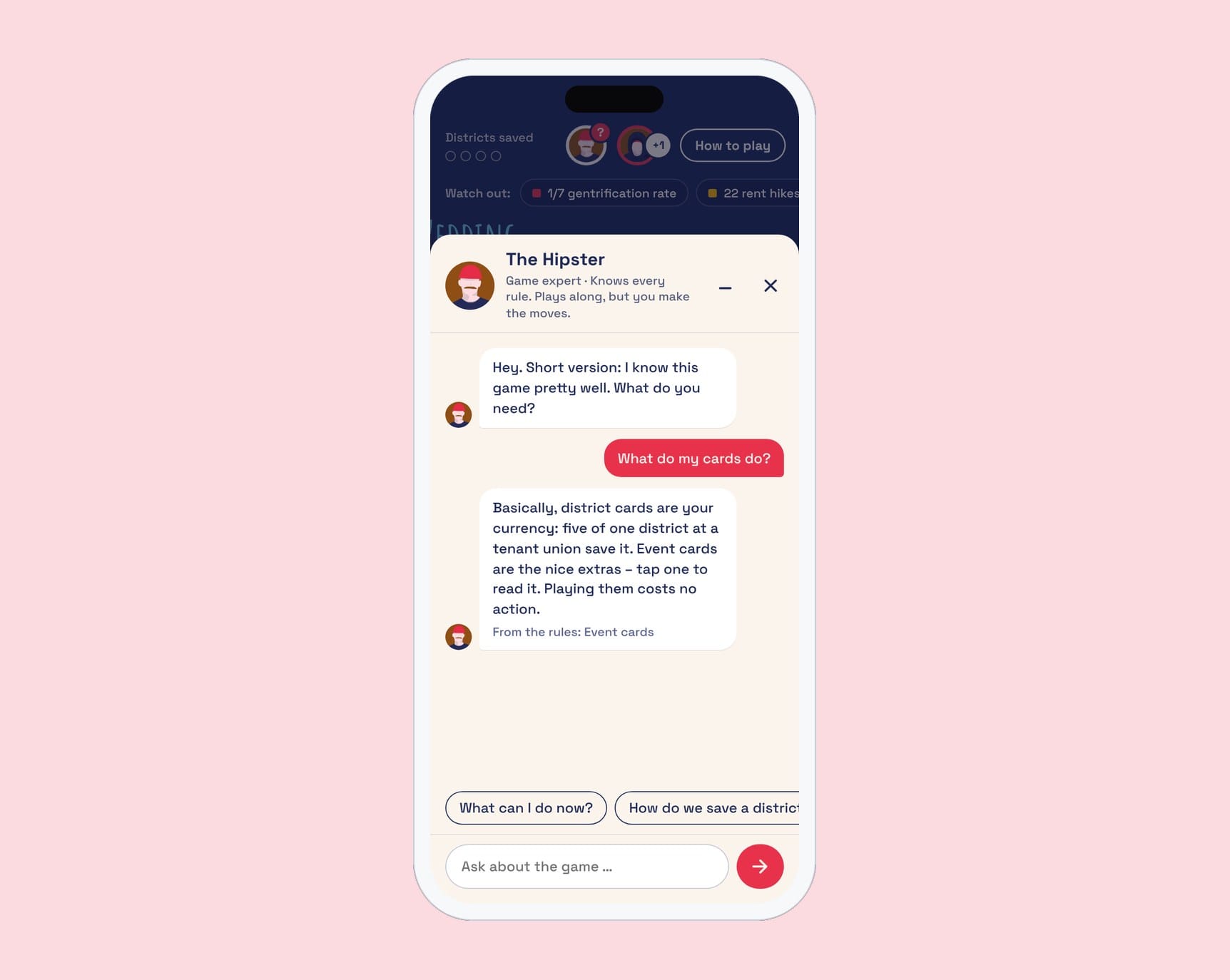
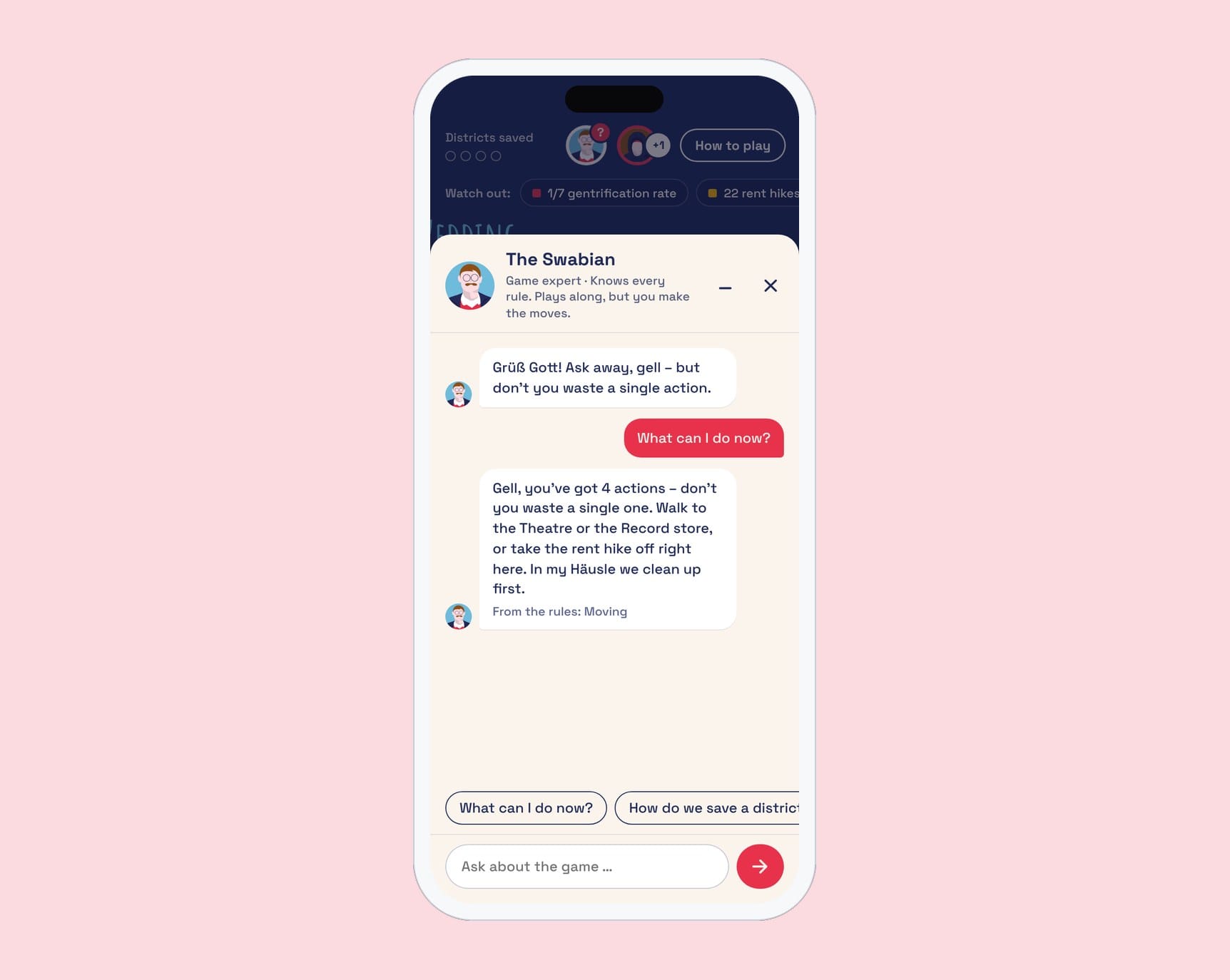
AI integration · The game expert
ChallengeAt a real table, one person has usually played before and explains the rules as they come up. Online, that person is missing.
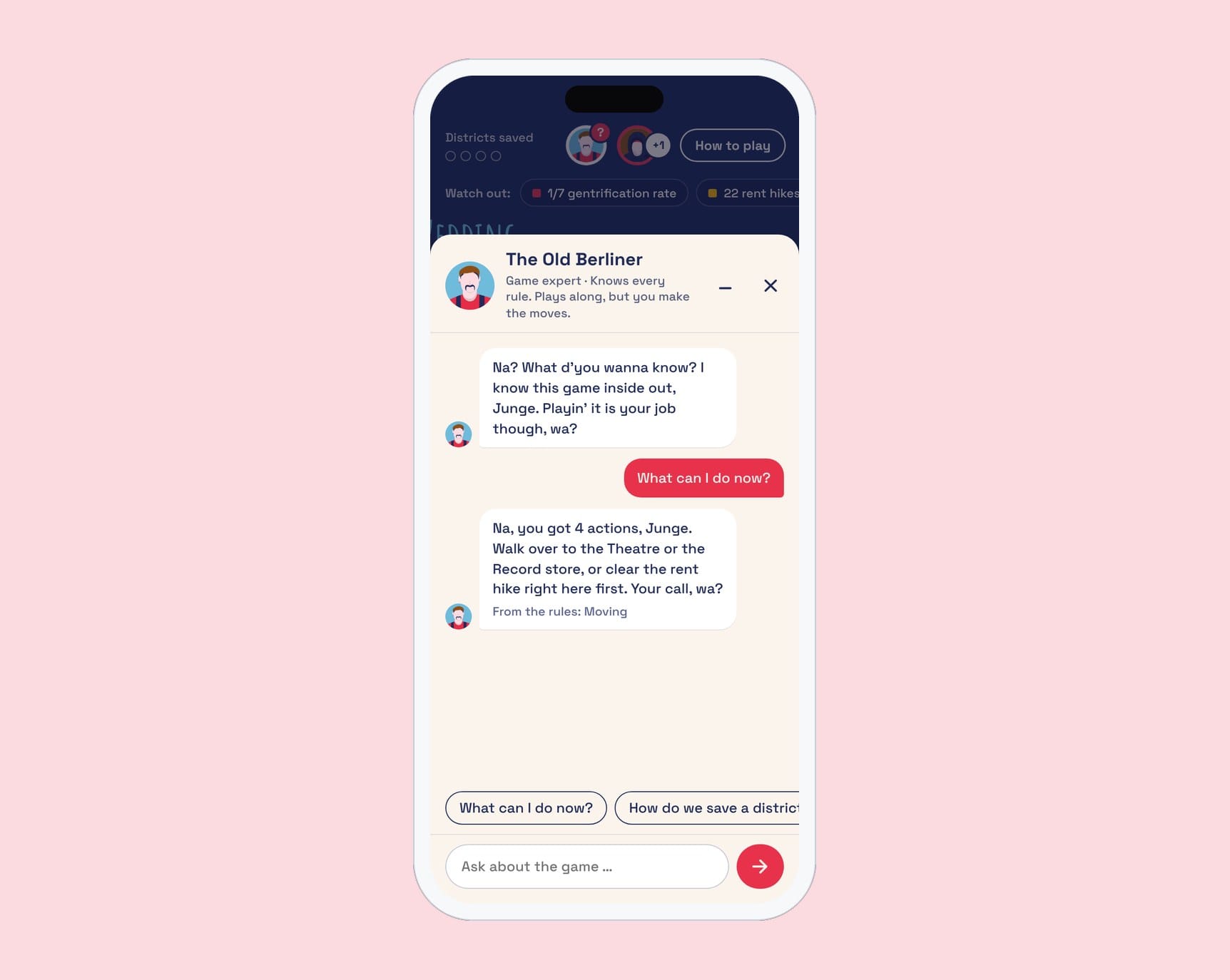
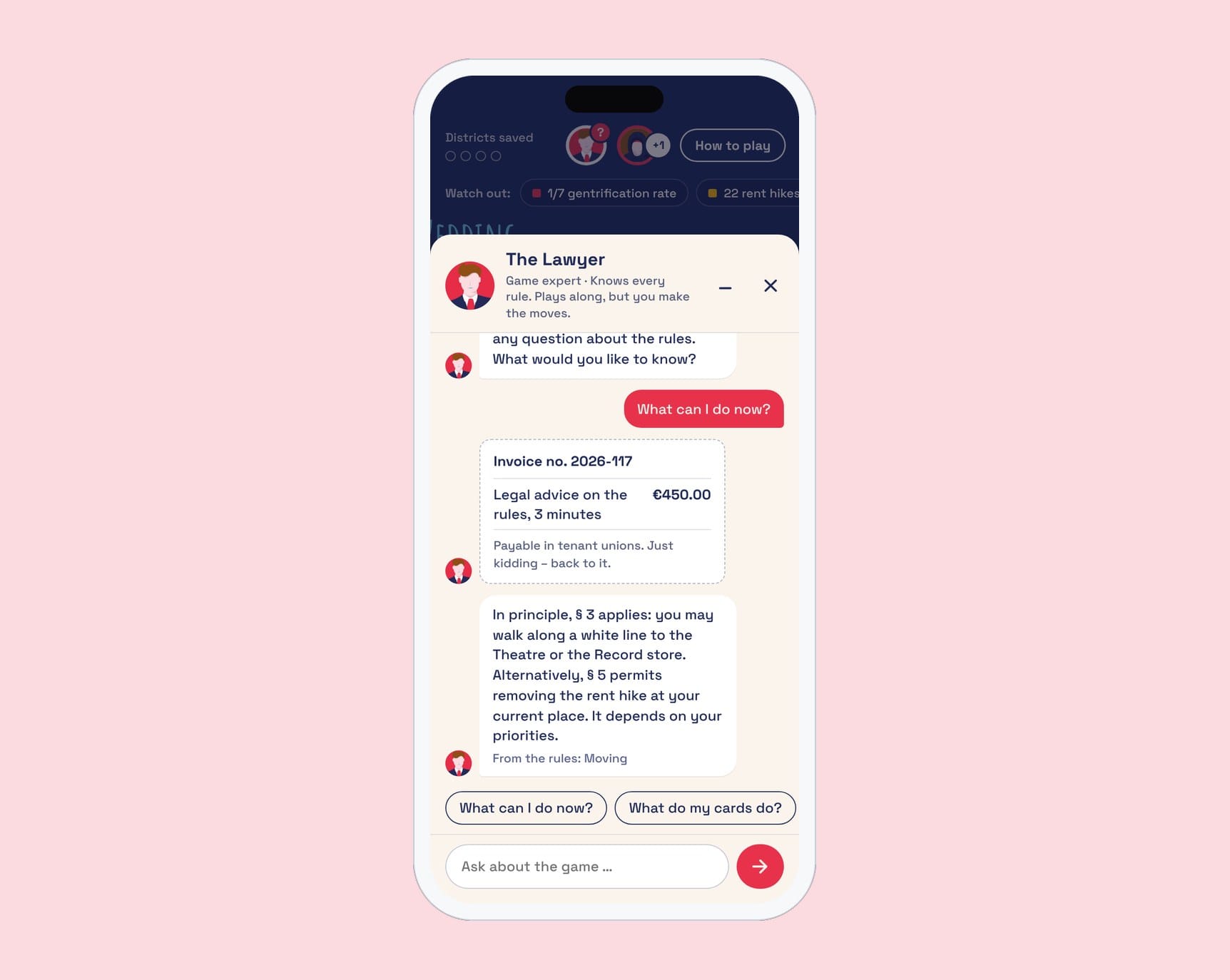
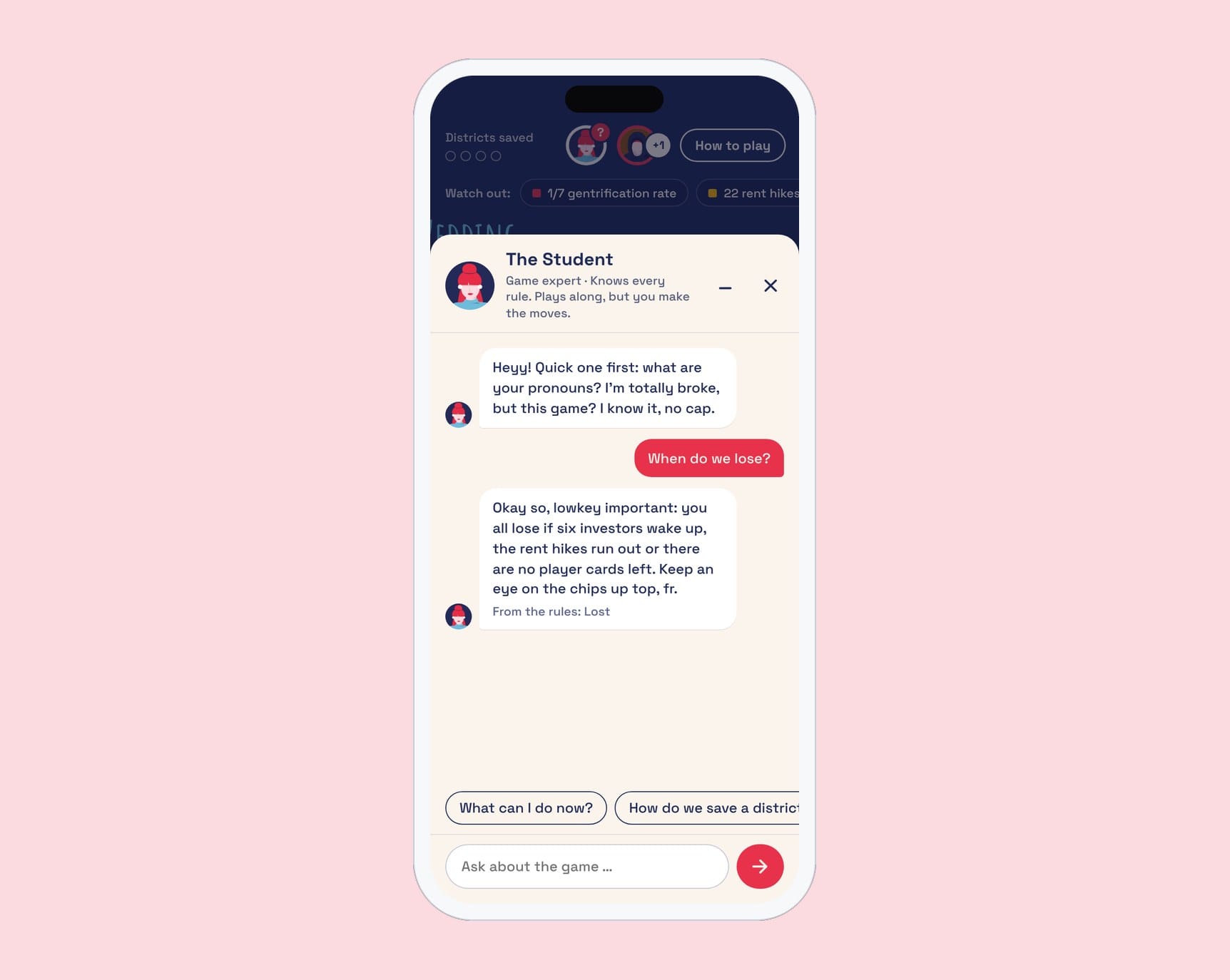
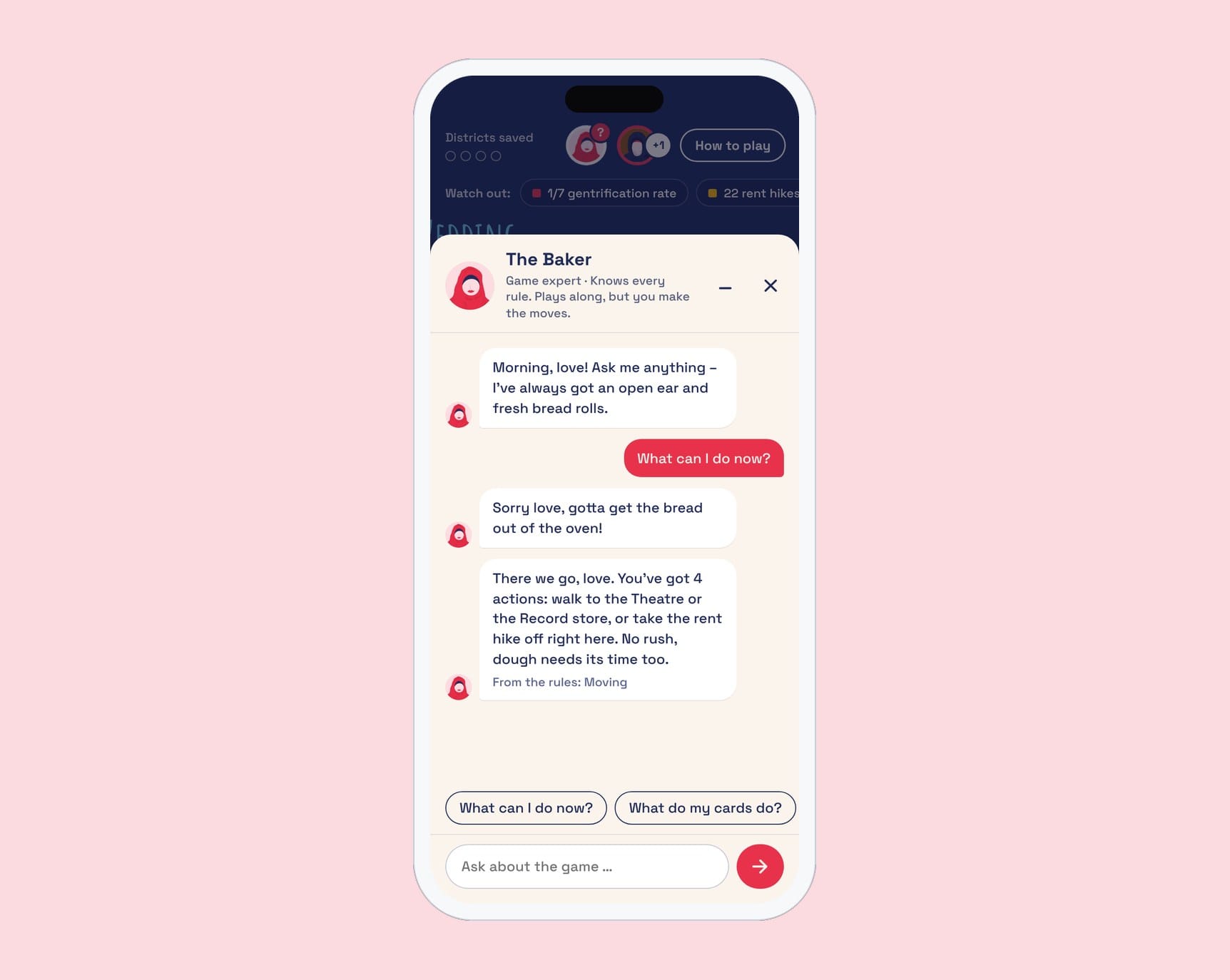
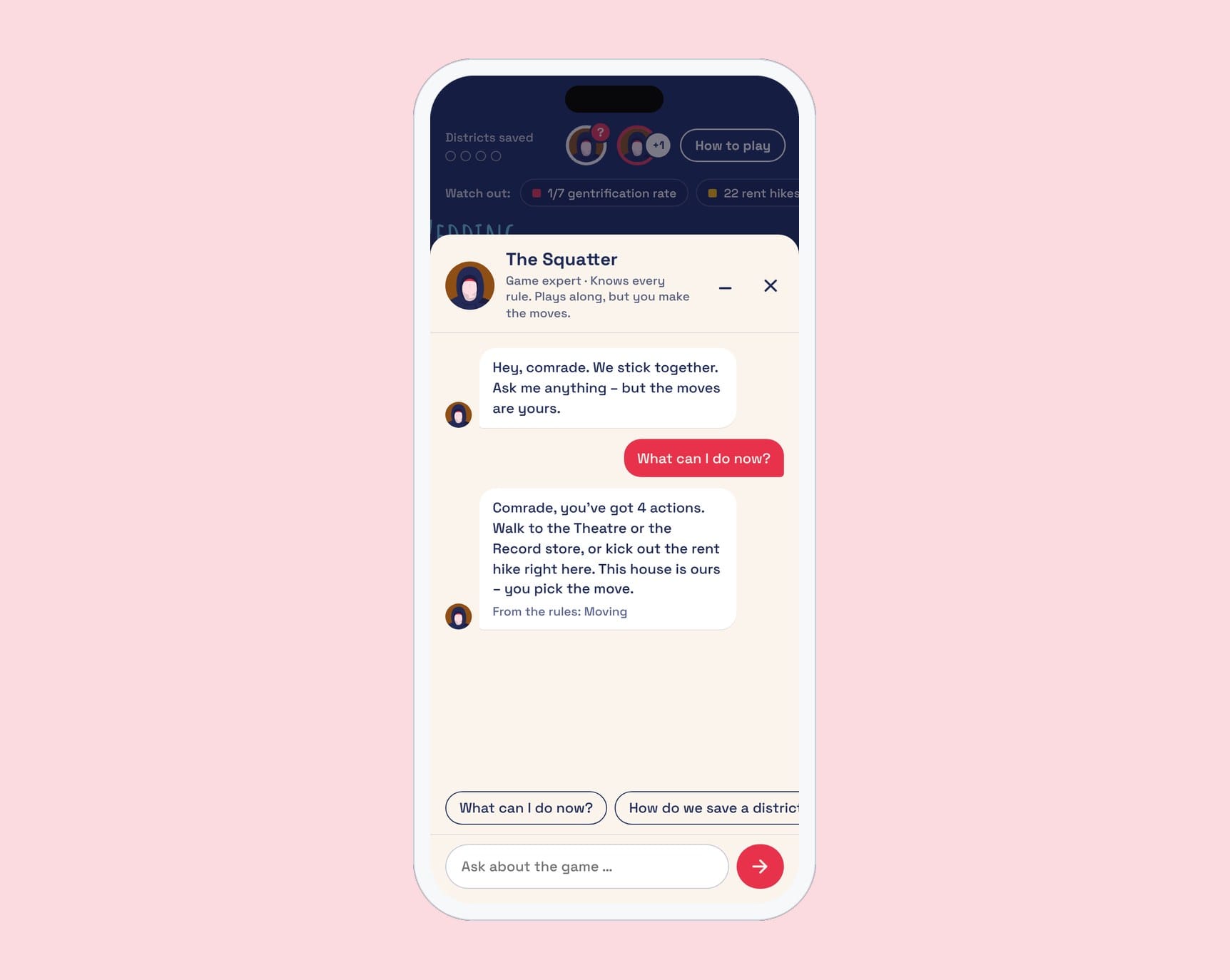
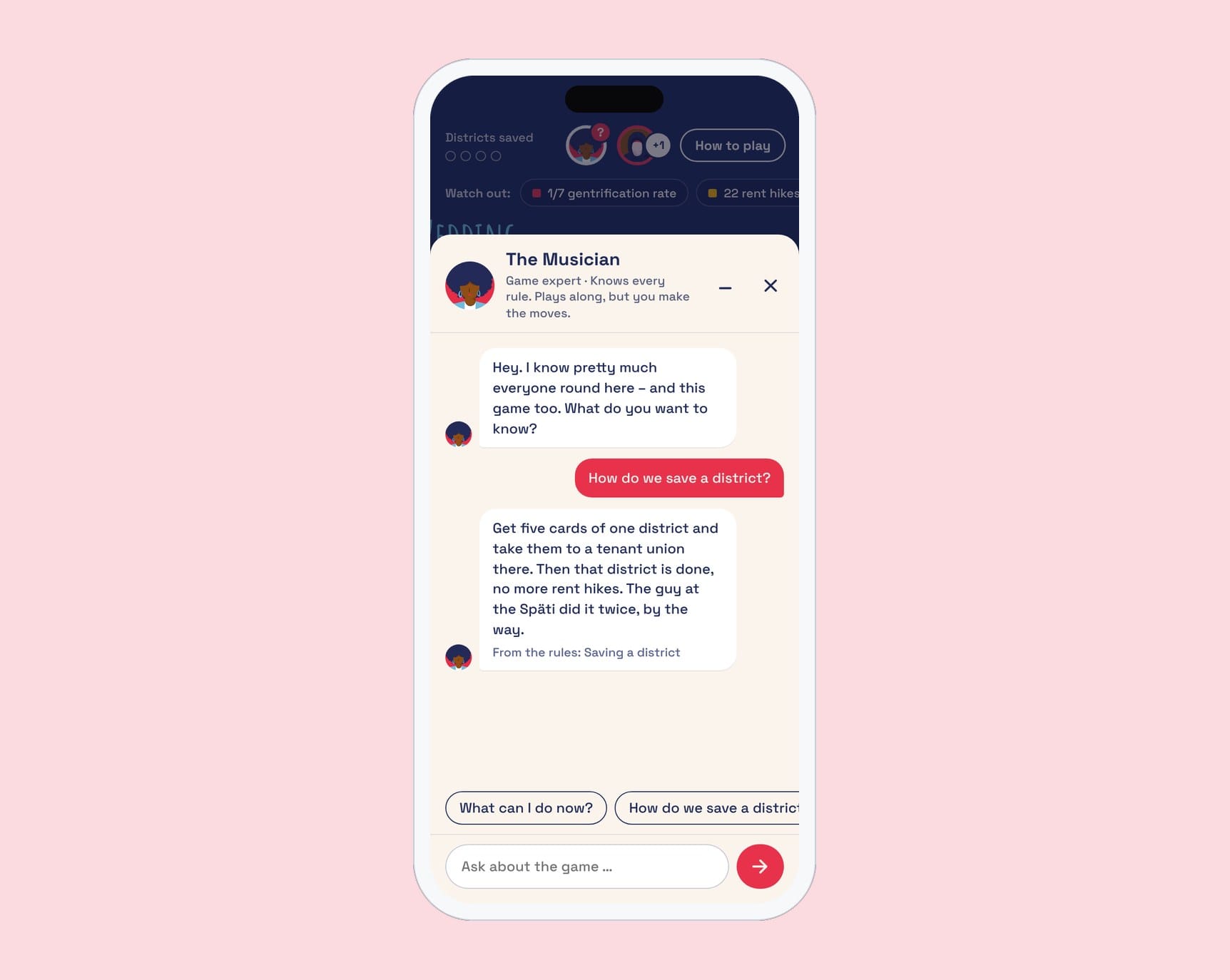
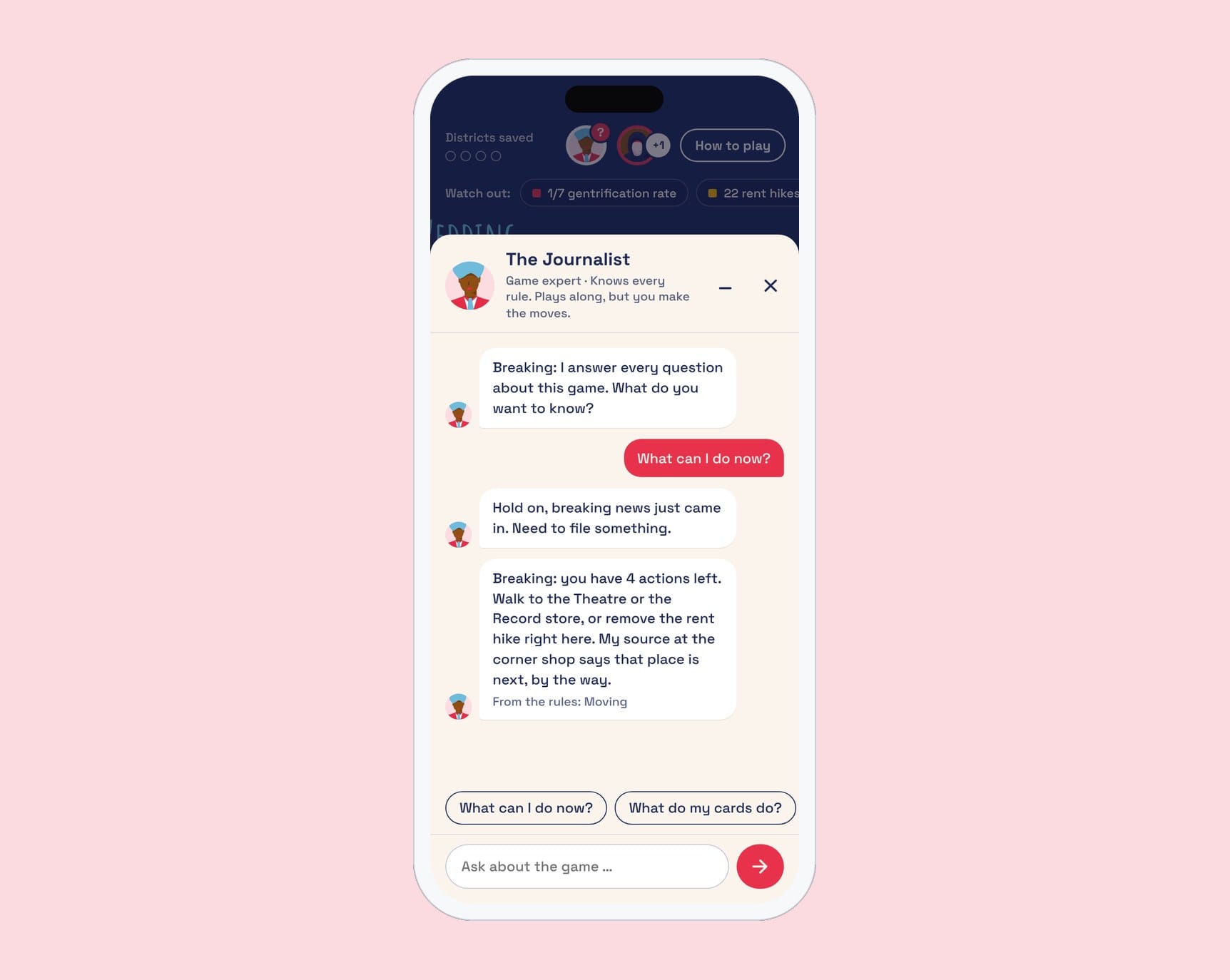
DecisionA character nobody picked joins as the game expert, a different one every game. They know every rule and the open game state, and answer in their own voice: the Old Berliner in Berliner Schnauze, the Lawyer citing sections, the Student asking for your pronouns first. Asked what to do, they name the options but never decide, and every answer shows the rule behind it.
DetailsThe chat shrinks to a speech bubble at the expert's picture, so you can read and play at the same time. Now and then someone doesn't answer straight away: the Baker has to get the bread out of the oven, the Lawyer sends an invoice.
Status: an interim solutionThe screens show the AI prototype, where you can ask anything. Running it on the live game needs a paid AI service, so for now the live game uses a free interim version: you tap one of a few questions, and the expert answers from the real game state in their own voice. The full AI version is the next step.
Reflection
Transforming a board game into a digital product wasn't about recreating the board. It was about making a complex system easier to learn, navigate and play.
The result is a playable prototype that preserves the identity of the original game while making it easier to learn and navigate.
- Year
- 2020, digital version 2026
- Type
- Board game, web game
- Scope of work
- Game design, illustration, product and UX/UI design, design system
- Built with
- Claude as coding partner